

Rainwater systems lose efficiency over time when they aren’t maintained. You’ll find that a well-maintained system not only maximizes your water collection but also extends the lifespan of your equipment.
While the initial setup might seem like the biggest challenge, it’s the ongoing maintenance that determines your system’s long-term success. The difference between abundant clean water and a failing system often comes down to just a few essential maintenance routines.
On this page
Regular Gutter Cleaning to Maximize Water Collection
While many homeowners overlook this essential step, regular gutter cleaning forms the foundation of an effective rainwater harvesting system.
You’ll need to remove leaves, twigs, and debris that accumulate seasonally to guarantee water flows freely to your collection points.
Schedule cleanings at least quarterly, with additional maintenance after heavy storms. Consider installing gutter guards to minimize buildup while allowing water to pass through.
When cleaning, check for proper gutter alignment and seal any leaks that might waste precious rainwater.
Use a garden hose to test water flow after cleaning, confirming that downspouts direct water correctly toward your storage tanks.
Remember that each gallon of rainwater collected reduces demand on municipal systems and provides chemical-free water for your garden.
Proper Filter Maintenance for Clean Water Quality
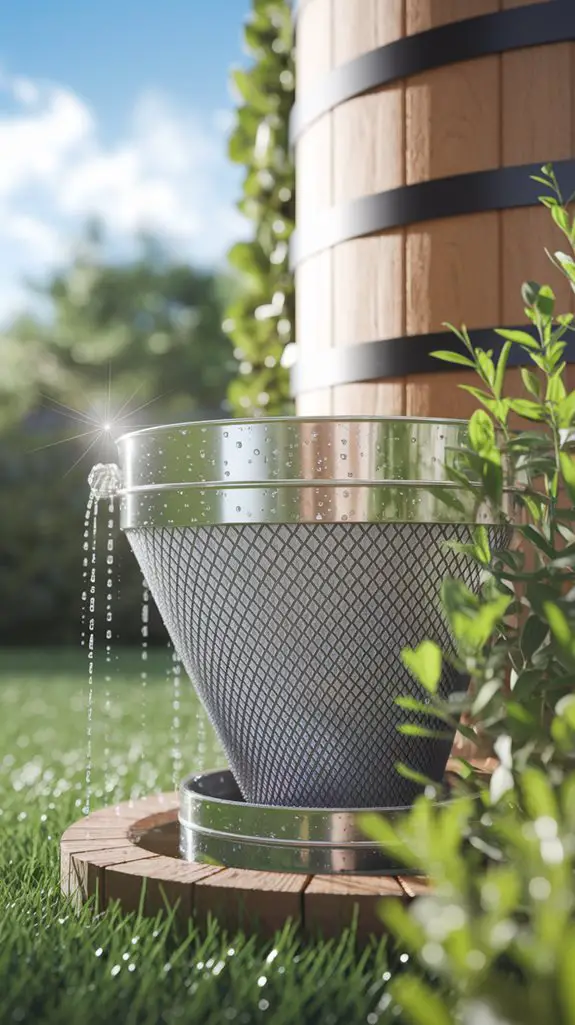
Because your filter system serves as the primary defense against contaminants entering your stored rainwater, regular maintenance is essential for preserving water quality.
Inspect filters monthly and clean them whenever debris accumulation reaches 50% capacity to prevent clogging and overflow.
For leaf screens and first-flush diverters, rinse with a gentle hose spray to remove trapped materials.
More advanced sediment and carbon filters may require systematic cleaning according to manufacturer guidelines or replacement every 3-6 months depending on rainfall volume and contamination levels.
Don’t forget to check filter seals and gaskets for deterioration that could allow unfiltered water to bypass the system.
During dry seasons, remove and thoroughly clean all filter components, then store them in a cool, dry place to extend their operational lifespan. Additionally, consider incorporating effective rainwater filtration solutions to enhance the overall quality of your harvested water.
Storage Tank Inspection and Sanitizing Schedule
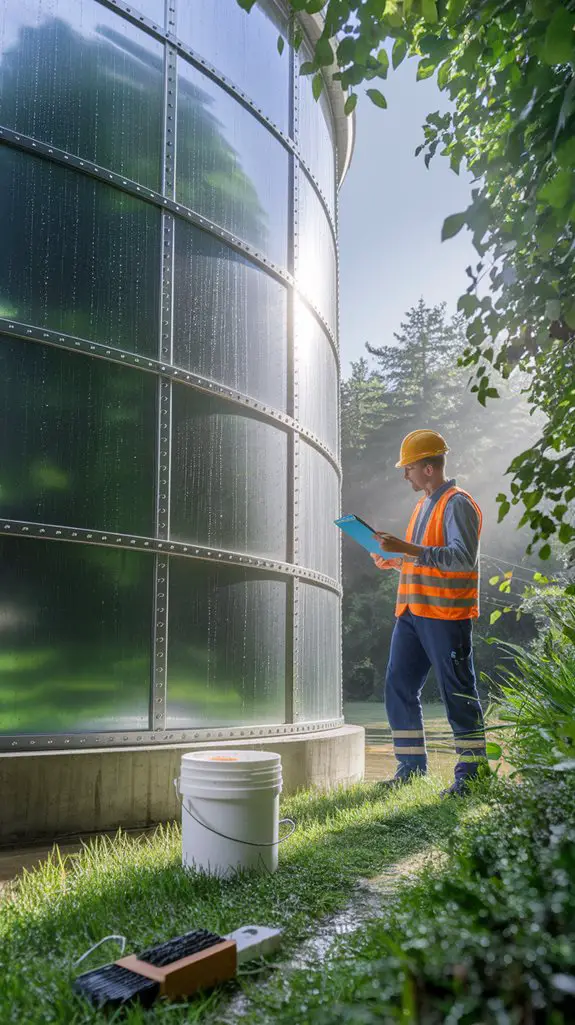
Regular inspection of your storage tank follows naturally from filter maintenance as the second major component of rainwater system care. Inspect tanks quarterly for sediment buildup, cracks, or algae growth, especially after heavy rainfall events.
Create a simple sanitizing schedule with annual deep cleaning during dry seasons. Use food-grade hydrogen peroxide (3%) at a ratio of 1 cup per 100 gallons to disinfect without harmful chemical residues. Alternatively, 2 tablespoons of bleach per 50 gallons works efficiently for concrete or plastic tanks.
Don’t forget to check access hatches for proper seals, inspect overflow pipes for blockages, and verify that inlet screens remain intact. Implementing a rainwater harvesting system can significantly enhance your landscape’s sustainability.
Document each inspection to track patterns and anticipate maintenance needs before they become costly repairs or compromise water quality.
Checking and Repairing Downspout Connections
Downspout connections represent critical junctures in your rainwater harvesting system where water transfers from roof gutters to storage tanks.
These connections often loosen over time due to thermal expansion, wind pressure, and seasonal movements.
Inspect all downspout connections quarterly, checking for gaps, cracks, or misalignments. You’ll need to guarantee diverters, filters, and first-flush devices remain properly seated.
Apply waterproof silicone sealant to minor leaks, but replace severely damaged components immediately.
During winter, disconnect and drain systems in freeze-prone regions to prevent ice expansion damage.
When reconnecting, verify that all gaskets are intact and fasteners are tight. Don’t forget to clear debris from connection points that might restrict water flow or cause backups.
For metal downspouts, check for corrosion at connection points where dissimilar metals meet, as galvanic reaction can accelerate deterioration. Additionally, ensuring that rainwater collection systems are properly designed can greatly enhance overall efficiency and prevent potential issues.
Preventing Mosquito Breeding in Your Harvesting System
Standing water in rainwater harvesting systems can quickly become a breeding ground for mosquitoes if left unchecked, potentially creating both a nuisance and health hazard around your property.
To prevent mosquito infestations, install fine mesh screens (1mm or smaller) on all tank openings, inlets, and overflow pipes.
Add a tablespoon of food-grade mineral oil to smaller containers to create a surface film that prevents larvae from breathing. For larger tanks, consider adding mosquito dunks containing Bacillus thuringiensis israelensis (BTi), a natural bacterium that targets mosquito larvae without harming other organisms or water quality.
Ensure your system empties completely between rain events when possible, and inspect weekly during warm months for larvae.
Proper maintenance eliminates mosquito breeding while preserving your harvested water’s usability.
Winterizing Your Rainwater System to Prevent Damage
When temperatures drop below freezing, your rainwater harvesting system faces significant risks including cracked pipes, damaged pumps, and split tanks that can lead to costly repairs come spring.
Prepare by draining all above-ground pipes, valves, and filters completely. Disconnect and store pumps indoors, or insulate them thoroughly if they must remain outside.
For collection tanks, maintain a water level below 90% capacity to allow for expansion if freezing occurs. Install insulated covers on exposed components and wrap vulnerable pipes with heat tape.
Consider installing freeze-resistant valves at key junctions.
If you’re in severely cold regions, consider a partial or complete system shutdown, redirecting downspouts away from collection areas until temperatures rise above freezing consistently.
These precautions will protect your investment and guarantee functionality when spring arrives.
Testing Collected Water and Adjusting Treatment Methods
Regular testing of your harvested rainwater provides critical information about its quality and helps you fine-tune your treatment approach. Use pH strips, turbidity tests, and microbiological screening quarterly to maintain safe water standards.
Adjust your filtration systems based on test results—increase UV exposure time for higher bacterial counts or add activated carbon filters for chemical contaminants.
- Pride in self-sufficiency when your test results show pristine water quality
- Relief knowing your family is protected from potential waterborne contaminants
- Satisfaction in reducing your environmental footprint through effective water management
- Confidence that you’re maximizing your system’s efficiency with data-driven adjustments
- Empowerment from understanding exactly what’s in your water supply
Remember that seasonal changes affect water quality, so test more frequently after heavy storms or extended dry periods.
Conclusion
By prioritizing these maintenance routines, you’ll transform your rainwater harvesting system from a passive collector into a thriving ecosystem of sustainability. Like tending a garden, regular care guarantees abundant yields.
Check gutters quarterly, clean filters monthly, inspect tanks regularly, and test water quality periodically. When winter approaches, don’t forget to winterize properly. Your diligence protects your investment while maximizing your contribution to water conservation.
