
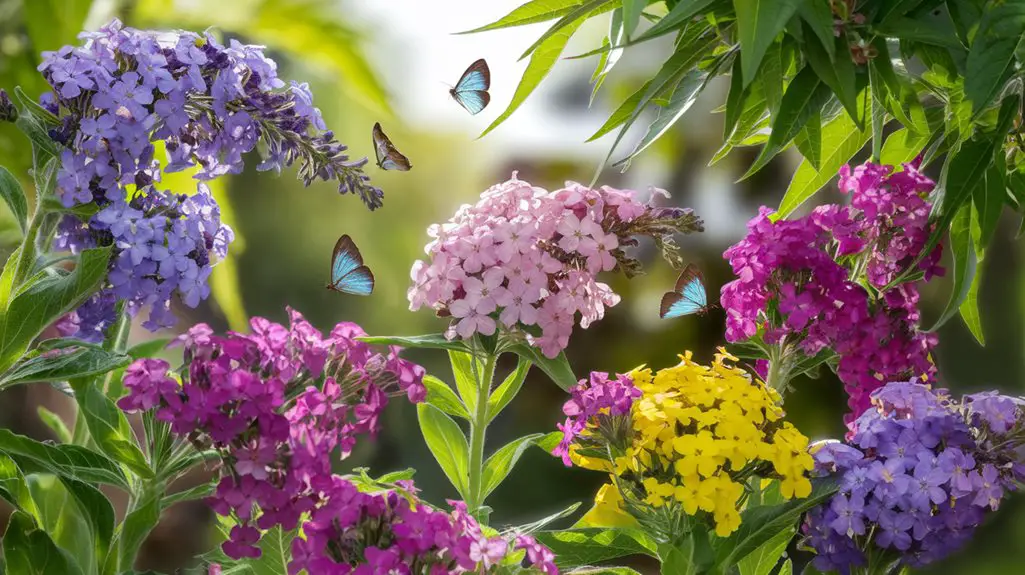
If you want to attract butterflies to your garden, choosing the right plants is fundamental. Certain species provide important resources like nectar and larval host options.
For instance, Milkweed is essential for Monarchs, while others like Coneflowers and Asters offer abundant blooms throughout the seasons. Understanding how these plants interact with butterflies can enhance biodiversity in your space. Let's explore ten specific plants that can make your garden a vibrant haven for these pollinators.
On this page
Milkweed
Milkweed is an essential plant for butterfly conservation, particularly for the iconic Monarch butterfly. This genus, Asclepias, provides critical habitat and food sources for Monarch larvae, as they exclusively feed on its leaves.
By planting milkweed in your garden, you're not only supporting the lifecycle of these butterflies but also enhancing local biodiversity. Milkweed's nectar-rich flowers attract adult butterflies, providing them with the energy needed for mating and migration.
There are various species of milkweed, including Common Milkweed and Swamp Milkweed, each suited to different soil types and moisture levels. Make sure you select native varieties to maximize ecological benefits. Additionally, incorporating a variety of native plants in your garden can further support diverse wildlife populations.
Butterfly Bush
While many plants can attract butterflies, the Butterfly Bush (Buddleja davidii) stands out as a favorite among gardeners for its vibrant, fragrant blooms. This deciduous shrub thrives in well-drained soil and full sun, reaching heights of 4 to 10 feet.
Its nectar-rich flowers, available in shades of purple, blue, and white, draw a variety of butterfly species, including monarchs and swallowtails. To guarantee your Butterfly Bush flourishes, consider the following care tips:
| Aspect | Details | Notes |
|---|---|---|
| Sunlight | Full sun (6+ hours daily) | Essential for blooms |
| Watering | Moderate, well-drained soil | Avoid overwatering |
| Pruning | Late winter or early spring | Encourage growth |
| Fertilization | Balanced fertilizer annually | Supports health |
| Pests | Minimal; monitor for aphids | Use organic controls |
With proper care, your Butterfly Bush will become a butterfly magnet! Additionally, planting habitats for beneficial insects can further enhance your garden's allure for butterflies and other pollinators.
Coneflower
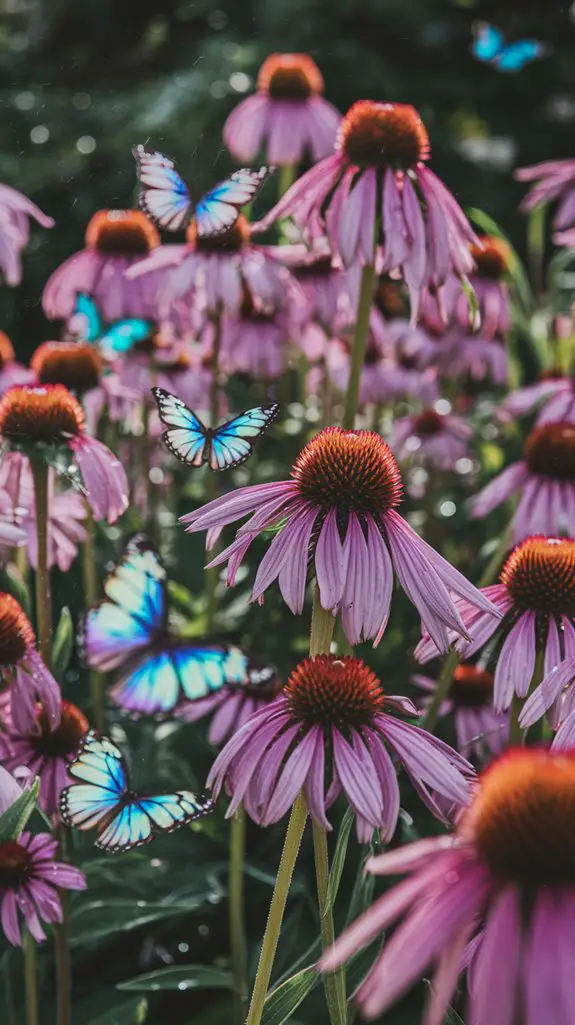
If you want to attract butterflies to your garden, the Coneflower (Echinacea) is an excellent choice. Known for its vibrant blooms and resilience, this perennial not only enhances your landscape but also serves as an essential nectar source for butterflies.
Here are four key benefits of cultivating Coneflowers:
- Nectar-Rich Flowers: Their daisy-like flowers produce abundant nectar, attracting various butterfly species.
- Drought Tolerance: Coneflowers thrive in poor soil and require minimal watering once established, making them low-maintenance.
- Long Blooming Season: They typically bloom from mid-summer to fall, providing a consistent food source.
- Wildlife Friendly: Besides butterflies, they also support bees and other beneficial pollinators, promoting biodiversity in your garden.
Additionally, incorporating native plants like Coneflowers into your garden can significantly enhance the ecosystem by providing habitat for various wildlife. Planting Coneflowers will create a lively and inviting habitat for butterflies.
Lantana
Lantana (Lantana camara) is a vibrant flowering plant that serves as a beacon for butterflies in any garden. Its clusters of small, colorful flowers bloom in various shades, attracting numerous butterfly species.
This plant thrives in full sun and well-drained soil, making it ideal for warm, dry climates. You'll find that lantana is drought-tolerant, requiring minimal maintenance once established.
Additionally, its fragrant nectar is a favorite among butterflies, providing essential sustenance. Plant it in borders or containers to create stunning displays while supporting local ecosystems. To further enhance your garden's appeal to butterflies, consider incorporating native plant species, which can provide additional food sources and habitats.
Be aware that while lantana is beneficial for butterflies, it can be invasive in some regions, so monitor its growth to guarantee it doesn't outcompete native plants.
Aster

Asters (Aster spp.) are essential additions to any butterfly garden, as their vibrant blooms provide both beauty and nourishment.
These perennial plants thrive in various soil types and conditions, making them adaptable and easy to grow. Here's why you should include asters in your garden:
- Seasonal Interest: They bloom late in the season, offering a vital food source for migratory butterflies.
- Diverse Varieties: With numerous species, you can choose colors and heights that suit your landscape.
- Pollinator-Friendly: Their nectar-rich flowers attract not only butterflies but also bees and other beneficial insects.
- Low Maintenance: Once established, asters require minimal care, enhancing your garden's sustainability.
Incorporating asters will create a lively and engaging environment for butterflies. Additionally, incorporating native plants like asters can help support local ecosystems and enhance biodiversity in your garden.
Black-eyed Susan
Black-eyed Susans (Rudbeckia hirta) complement asters beautifully in a butterfly garden, providing additional color and attracting a wide range of pollinators.
These perennial plants thrive in full sun and well-drained soil, flourishing in USDA hardiness zones 3 through 9. Their vibrant yellow petals and distinctive dark centers create a striking visual appeal that draws butterflies, bees, and other beneficial insects.
You'll find that they bloom from mid-summer to early fall, offering a continuous food source for pollinators. Additionally, their sturdy stems withstand wind and rain, ensuring longevity in your garden.
To enhance their growth, consider deadheading spent flowers and dividing clumps every few years. Incorporating Black-eyed Susans into your garden will surely increase its ecological value. Moreover, they are known for attracting a wide range of pollinators, making them a fantastic addition to any garden.
Zinnia

Zinnias (Zinnia elegans) are a vibrant addition to any butterfly garden, known for their bright colors and resilience in various conditions. By incorporating zinnias, you'll create an inviting environment for butterflies.
Here are some key benefits:
- Diverse Colors: Zinnias come in a range of hues, attracting various butterfly species.
- Long Blooming Season: They bloom from summer to frost, providing a continuous food source.
- Easy to Grow: These flowers thrive in full sun and well-drained soil, making them ideal for novice gardeners.
- Low Maintenance: Zinnias require minimal care, allowing you to enjoy their beauty without a significant time investment.
Additionally, zinnias are excellent for attracting wildlife as they provide a rich nectar source for butterflies and other pollinators. Choose zinnias to enhance your butterfly garden, and watch your garden flourish with life!
Phlox
Phlox, with its stunning clusters of colorful blooms, is an excellent choice for attracting butterflies to your garden.
These perennial plants thrive in full sun and well-drained soil, making them adaptable to various garden settings. You'll find both annual and perennial varieties, with heights ranging from 1 to 4 feet.
Their tubular flowers, rich in nectar, are particularly appealing to butterfly species like the Swallowtail and Monarch. To encourage ideal growth, water them regularly, especially during dry spells, and deadhead spent blooms to promote further flowering.
Planting phlox in groups enhances their visibility and impact, drawing butterflies in droves. By incorporating phlox into your landscape, you'll create a vibrant habitat that supports these essential pollinators while enjoying their beauty. Additionally, using organic pest control methods can help protect these plants from harmful insects, ensuring a thriving butterfly-friendly garden.
Verbena
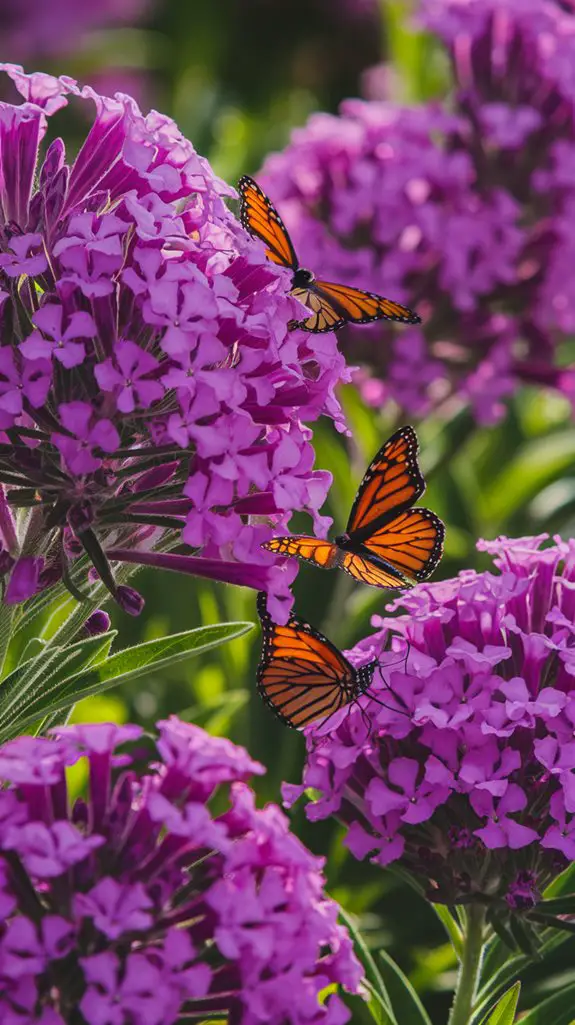
Verbena stands out as a vibrant addition to any butterfly garden, thanks to its abundant clusters of small, colorful flowers that provide a rich source of nectar.
To maximize your success with verbena, consider the following key points:
- Variety: Choose species like Verbena bonariensis for height or Verbena hastata for a low-growing option.
- Sunlight: Confirm verbena receives full sun for at least six hours daily, promoting vigorous flowering.
- Soil: Use well-draining soil with moderate fertility to avoid root rot and encourage healthy growth.
- Watering: Water regularly but allow the soil to dry out between sessions, as verbena is drought-tolerant once established. Additionally, creating a pollinator-friendly habitat not only attracts butterflies but also supports a diverse ecosystem in your garden.
Marigold
Marigolds are another fantastic choice for attracting butterflies to your garden, offering not only vibrant colors but also a wealth of nectar. These annuals thrive in full sun and well-drained soil, making them easy to grow. Additionally, they can deter pests, providing dual benefits for your garden ecosystem.
| Feature | Details |
|---|---|
| Color Variations | Yellow, orange, red |
| Bloom Time | Spring to frost |
| Butterfly Species | Monarchs, Swallowtails |
Conclusion
By planting these ten butterfly-attracting plants, you're not just adding color to your garden; you're inviting nature's delicate dancers to grace your space. Each bloom acts like a beacon, drawing in these enchanting pollinators while creating a thriving ecosystem.
As you nurture your garden, you'll witness a vibrant tapestry of life, where butterflies flutter and pollinate, ensuring your plants flourish. Embrace this opportunity to cultivate a butterfly-friendly haven and watch your garden transform into a lively paradise.
