
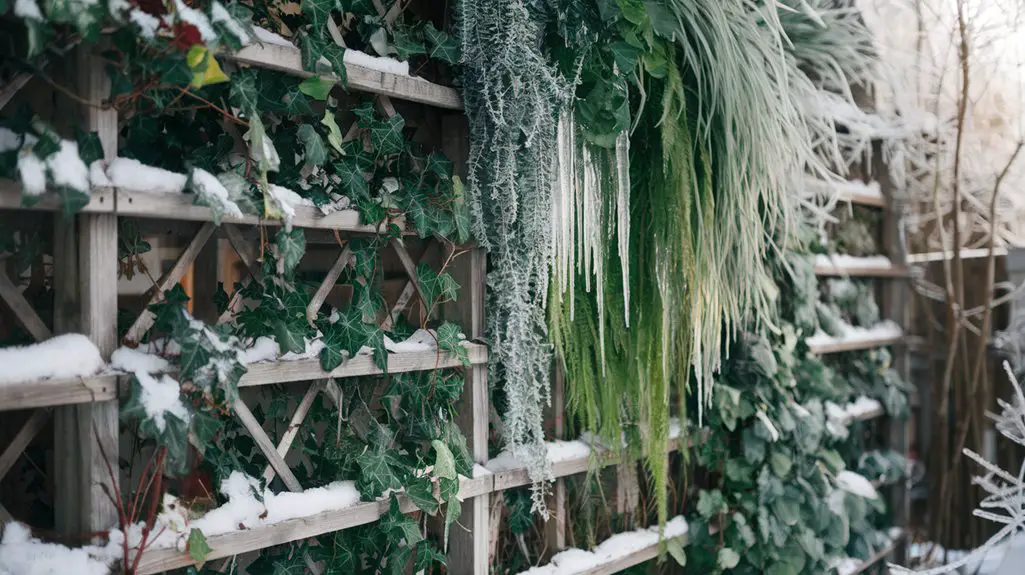
If you're looking to maintain a thriving winter vertical garden, there are key strategies you should implement. Start by selecting hardy plants that thrive in cooler temperatures. Next, consider insulation methods to protect your plants from frost.
Additionally, managing moisture levels is essential during the colder months. You'll also want to guarantee your plants receive sufficient light.
Finally, regular pruning can make a significant difference in your garden's health. Let's explore these tips in detail.
On this page
Choose the Right Plants for Winter Growth
When selecting plants for your winter vertical garden, it's essential to contemplate species that thrive in cooler temperatures.
Opt for hardy varieties like kale, spinach, and Swiss chard, which can withstand frost and continue to grow.
Consider incorporating winter flowering plants such as pansies and violas, as they add color and visual interest.
Herbs like thyme and parsley also perform well in colder months, providing fresh flavors for your kitchen.
Make sure you choose plants with similar light and water requirements to simplify care.
Additionally, look for varieties specifically bred for winter resilience, as these will offer better yields and longevity.
Insulate Your Vertical Garden
After you've chosen hardy plants for your winter vertical garden, insulating the structure becomes a key step in ensuring their survival and health. Proper insulation helps maintain consistent temperatures, protecting roots from freezing and retaining moisture.
Here's a quick guide to insulation methods:
| Insulation Method | Benefits |
|---|---|
| Bubble Wrap | Lightweight, easy to apply |
| Foam Panels | Excellent thermal resistance |
| Straw Bales | Natural, biodegradable option |
Choose the method that fits your garden's design and climate. Additionally, consider covering the garden with a frost blanket during extreme cold spells. This extra layer can greatly enhance temperature regulation, ensuring your plants thrive through the winter months.
Monitor Watering Needs
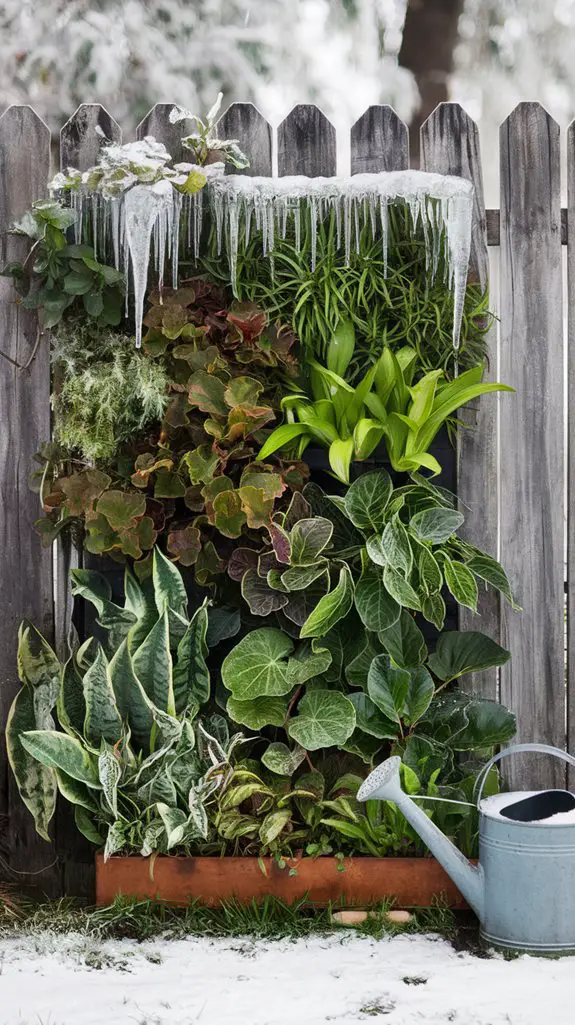
Monitoring your vertical garden's watering needs during winter is essential for plant health. Cold temperatures can slow evaporation and reduce water uptake, leading you to overwater or underwater your plants.
Check the moisture level by inserting your finger into the soil; if it's dry up to your first knuckle, it's time to water. Adjust your watering schedule based on factors like humidity and temperature fluctuations.
Use a moisture meter for more precise readings, especially in different sections of your vertical garden. Employ drip irrigation or self-watering systems to maintain consistent moisture levels.
Provide Adequate Light
Since winter days are shorter and often cloudier, providing adequate light for your vertical garden becomes crucial for plant health.
To guarantee your plants thrive, consider using grow lights, as they can mimic natural sunlight. Position these lights about 12 to 24 inches above your plants, depending on their light requirements. Choose full-spectrum LED lights, which efficiently emit the wavelengths necessary for photosynthesis.
Aim for at least 12 to 16 hours of light daily; using a timer can help maintain consistency. Monitor your plants closely for signs of light deficiency, such as leggy growth or yellowing leaves.
Prune and Maintain Regularly
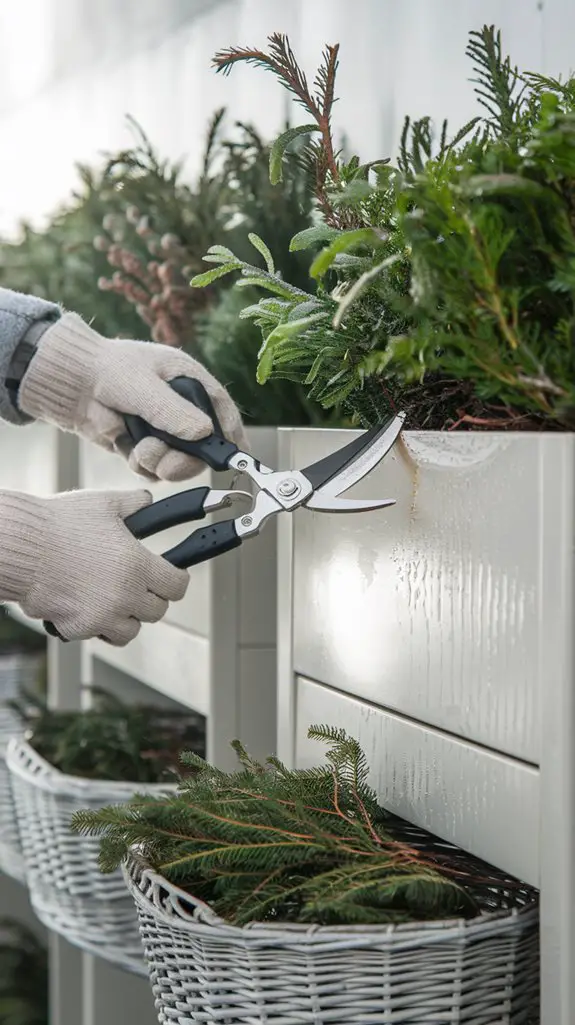
While you might think winter is a time for your vertical garden to rest, regular pruning and maintenance are crucial to keep your plants healthy and vibrant.
Start by inspecting your plants for dead or yellowing leaves, as these can harbor pests and diseases. Trim away any unhealthy foliage to promote airflow and light penetration.
Next, check the structure of your vertical garden; verify it remains stable and secure. Adjust any loose connections and replenish soil nutrients with a balanced, slow-release fertilizer.
Water your plants as needed, but avoid overwatering, as winter conditions can lead to root rot. Additionally, remember that vertical garden maintenance requires consistent attention to ensure optimal plant health.
Finally, keep an eye on temperature fluctuations and protect your garden from extreme cold with appropriate coverings if necessary.
Conclusion
To sum up, caring for your winter vertical garden is like nurturing a delicate ecosystem. By selecting hardy plants, insulating your garden, and monitoring moisture levels, you create a thriving environment.
Don't forget to enhance light conditions and maintain your plants regularly. With these strategies in place, you'll not only protect your garden from winter's chill but also cultivate a vibrant source of fresh greens throughout the season. Happy gardening!
