
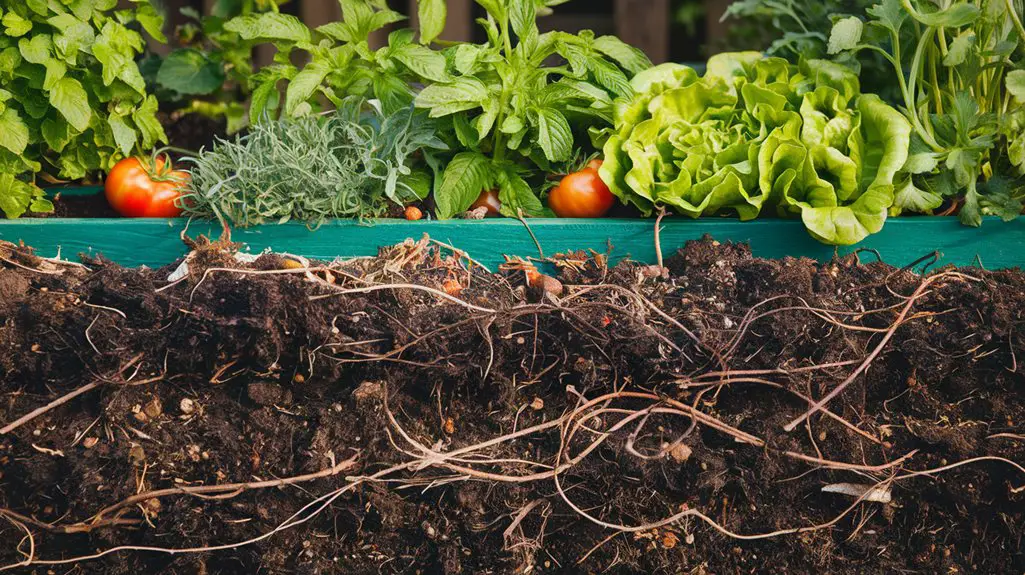
Filling raised garden beds can be a straightforward task or a complex challenge, depending on your approach. By employing effective layering techniques, you can optimize growth while enhancing soil health.
Understanding how to incorporate compost, mulch, and other materials makes a significant difference. What methods should you prioritize to guarantee your garden flourishes? Let's explore the best practices for filling your raised beds effectively.
On this page
Use a Layering Technique
When you fill raised garden beds, using a layering technique can greatly enhance soil health and plant growth.
Start with coarse materials like small branches or wood chips at the bottom to improve drainage. Next, add a layer of straw or dried leaves, which will break down over time and create air pockets.
Follow this with a mix of compost and topsoil, ensuring nutrients are evenly distributed for your plants. The layers not only provide structure but also promote microbial activity essential for nutrient uptake. Additionally, raised garden beds can improve drainage and help prevent soil compaction, which is beneficial for plant health.
As the materials decompose, they'll enrich the soil, leading to healthier plants. Finally, consider topping with mulch to retain moisture, reduce weeds, and maintain a consistent temperature for ideal growth conditions.
Incorporate Compost and Organic Matter
Incorporating compost and organic matter is crucial for creating a thriving environment in your raised garden beds. Compost enriches the soil with essential nutrients, improves soil structure, and enhances water retention.
Start by mixing well-decomposed compost into the existing soil, aiming for a ratio of about 25-30%. You can also add organic materials like shredded leaves, grass clippings, or kitchen scraps to boost microbial activity and nutrient diversity.
These additions not only feed plants but also promote a healthy ecosystem in your garden. Remember to turn the compost regularly to guarantee proper aeration and decomposition.
Add Mulch for Moisture Retention

Adding mulch to your raised garden beds can greatly enhance moisture retention, ensuring your plants have a consistent water supply.
Mulch acts as a barrier, reducing evaporation from the soil surface. By applying a layer of organic or inorganic mulch, you'll help maintain soil temperature, which further supports root health. Aim for a thickness of 2 to 4 inches, covering the soil without smothering the plants.
Organic options, like shredded bark or wood chips, break down over time, enriching the soil. Inorganic choices, such as gravel or landscape fabric, provide long-lasting coverage.
Regularly check the mulch layer and replenish it as needed to maintain its effectiveness. This simple step can notably improve the overall health and yield of your garden.
Utilize Straw or Hay
Utilizing straw or hay in your raised garden beds can greatly enhance soil structure and provide essential nutrients as they decompose. Both materials are carbon-rich, which helps balance nitrogen levels in your soil, fostering a healthy ecosystem for plants.
When you layer straw or hay, aim for a depth of 3-4 inches. This not only improves aeration but also retains moisture, reducing the need for frequent watering.
As they break down, they release nutrients like potassium and phosphorus, crucial for plant growth. Additionally, using recycled materials for your raised beds can further contribute to a sustainable gardening approach.
Be cautious with hay that may contain seeds, as they can introduce weeds. Regularly turning the straw or hay into the soil can accelerate decomposition, ensuring your garden beds remain fertile and productive throughout the growing season.
Mix in Native Soil
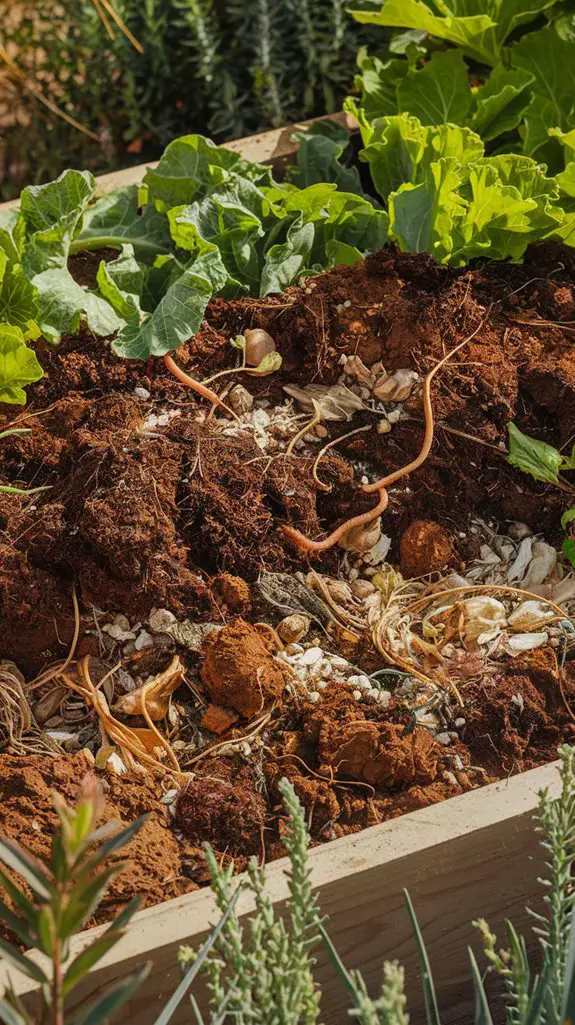
Mixing in native soil can greatly enhance the overall quality of your raised garden beds, as it promotes better drainage and improves nutrient availability.
By incorporating native soil, you introduce beneficial microorganisms and organic matter that support healthy plant growth. Before mixing, test your native soil for pH and nutrient levels to guarantee it meets your plants' needs.
Aim for a blend that consists of about 25-50% native soil combined with your chosen compost and other amendments. This ratio helps maintain soil structure while providing essential nutrients.
When adding native soil, make sure it's free of contaminants like pesticides or herbicides.
With the right mix, you'll create an ideal environment for your plants to thrive, maximizing their potential throughout the growing season.
Consider Using a Soil Block Mix
Have you considered how a soil block mix can enhance your raised garden beds? This method involves creating compact, self-contained blocks of soil that promote healthy root development and improved drainage.
By using a blend of compost, peat moss, and vermiculite, you can achieve a nutrient-rich environment. The soil block mix allows for better aeration and moisture retention, essential for robust plant growth.
It also reduces soil compaction, ensuring that roots can easily penetrate the soil for ideal nutrient uptake. Plus, since soil blocks are reusable, they can save you money in the long run.
When filling your raised beds, try a soil block mix to create a thriving garden ecosystem that supports your plants effectively.
Explore Alternative Fillers Like Wood Chips or Leaves
When filling your raised garden beds, consider alternative fillers like wood chips or leaves for an effective and eco-friendly solution.
Wood chips provide excellent aeration and drainage while slowly breaking down, enriching the soil over time. They also help suppress weeds, reducing maintenance.
On the other hand, leaves are a great source of organic matter. Shredding them increases decomposition speed, allowing you to create nutrient-rich compost quickly.
Both options are cost-effective and promote biodiversity by fostering beneficial microorganisms. Additionally, using organic materials can enhance soil structure and moisture retention.
However, avoid using treated wood chips, as they may contain harmful chemicals.
Mix these fillers with compost to guarantee a balanced nutrient profile.
Conclusion
By employing these techniques, you can create a thriving environment for your plants in raised garden beds. For instance, mixing compost into native soil and adding a layer of straw can lead to stronger tomato plants and a bigger harvest.
With careful layering and the right materials, you'll enhance soil health and boost your garden's productivity. Start filling your raised beds today for a bountiful harvest tomorrow!
