
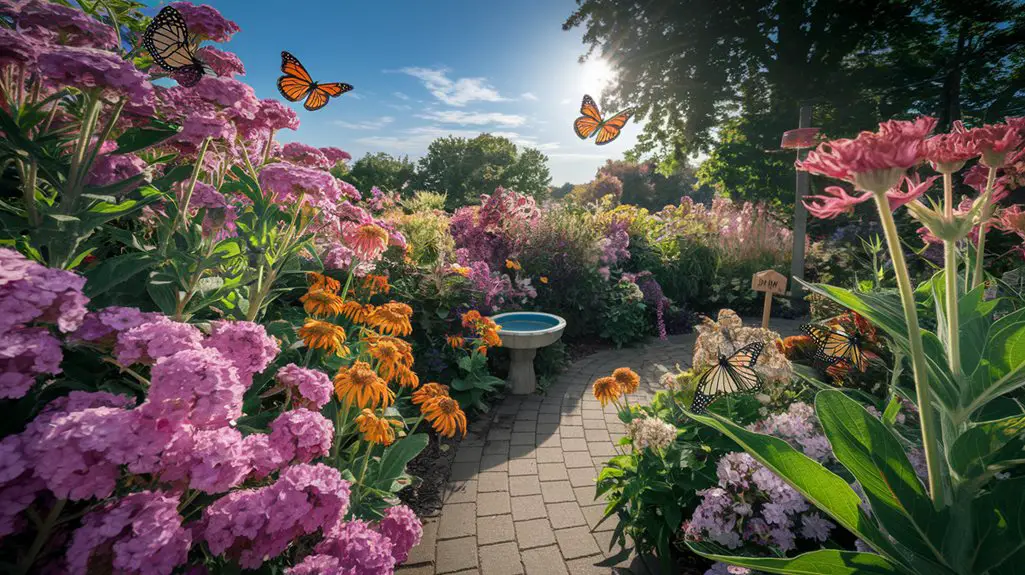
Are you ready to transform your ordinary garden into a vibrant haven for butterflies? You've likely noticed these delicate creatures becoming increasingly rare in urban environments.
With just seven strategic steps, you can create a sanctuary that attracts, nourishes, and protects these essential pollinators throughout their lifecycle. The impact extends beyond mere beauty—you'll be actively contributing to butterfly conservation while enjoying the rewards of their graceful presence in your outdoor space.
On this page
Choose the Perfect Location for Your Butterfly Haven
The single most critical decision you'll make when creating a butterfly garden is selecting its location. Butterflies need warmth and abundant sunlight, so choose a spot that receives at least 6 hours of direct sun daily.
They're cold-blooded creatures that require solar energy to regulate their body temperature and fly effectively. Wind protection is equally important—strong gusts can damage delicate wings and make navigation difficult.
Position your garden near windbreaks like fences, shrubs, or buildings to create a sheltered microclimate. Consider proximity to existing butterfly populations and natural corridors.
Your garden should connect with their established flight paths and feeding areas. Avoid locations near roads with heavy traffic or areas where pesticides are frequently used, as these pose significant threats to butterfly survival.
Select Native Plants That Attract Butterflies
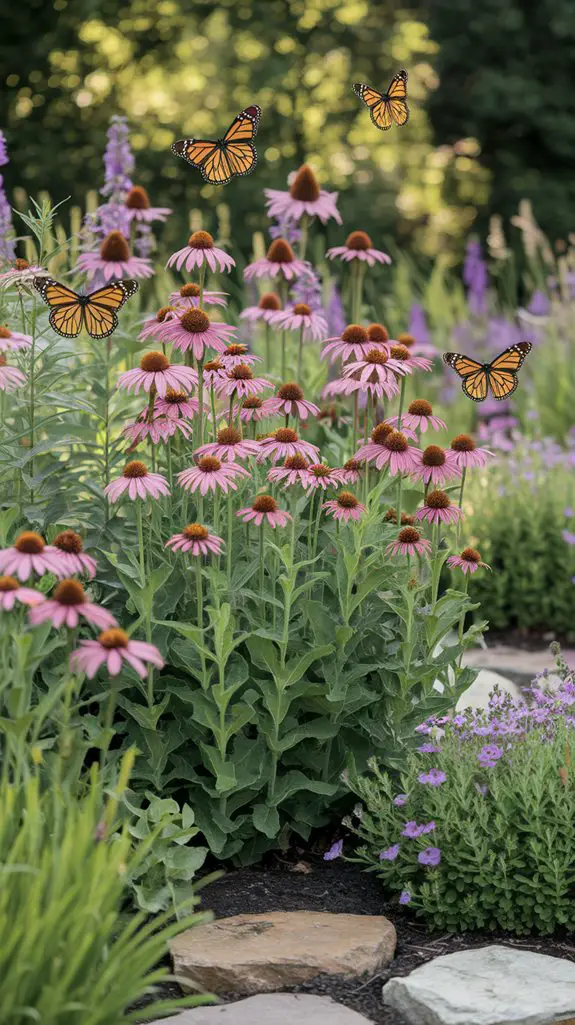
Once you've established the perfect sun-drenched, wind-protected location for your butterfly garden, your plant selection becomes the foundation of its success.
Native plants offer the best nutrition for local butterfly species, as they've co-evolved over thousands of years.
Include nectar-rich flowers such as milkweed, coneflower, black-eyed Susan, and butterfly bush to feed adult butterflies.
Don't forget to plant host species where females can lay eggs and caterpillars can feed—monarchs require milkweed while swallowtails prefer parsley and dill.
Arrange plants in clusters to create visible "landing pads" that attract butterflies from afar.
Choose varieties with staggered blooming periods to provide continuous nectar sources throughout the growing season.
This strategic approach guarantees your garden supports the complete butterfly lifecycle while creating a vibrant, sustainable ecosystem. Additionally, incorporating native plants enhances the overall biodiversity of your garden, benefiting other wildlife.
Create Butterfly Feeding Stations With Nectar-Rich Flowers
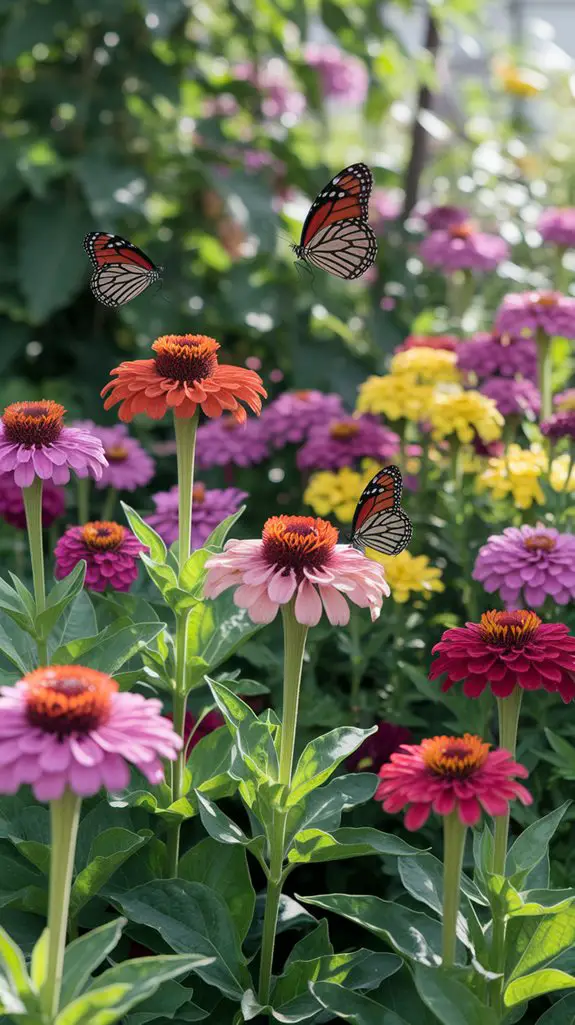
While native plants form the backbone of your butterfly garden, dedicated feeding stations can dramatically increase butterfly activity and provide thrilling up-close observation opportunities.
Create these stations by clustering nectar-rich flowers like zinnias, cosmos, and lantana in sunny, wind-protected spots throughout your garden.
Choose flowers with different bloom times to guarantee continuous nectar sources from spring through fall. Include shallow dishes with overripe fruit—bananas, oranges, and watermelon work exceptionally well—to attract species that prefer fermenting fruit to flower nectar.
For maximum effectiveness, position these feeding stations near butterfly host plants. You'll notice increased activity when butterflies can easily move between laying eggs, feeding, and seeking shelter.
Remember to avoid pesticides near these areas, as they'll defeat your efforts to create a butterfly haven.
Provide Safe Shelter and Resting Areas
Butterflies need more than just food to thrive in your garden; they require safe havens where they can rest, warm themselves, and shelter from predators and harsh weather.
Create these sanctuaries by placing flat rocks in sunny locations where butterflies can bask and regulate their body temperature. Dense shrubs, tall native grasses, and brush piles offer protection from wind and rain.
Install butterfly houses—specialized wooden structures with narrow vertical slits—in sheltered areas away from prevailing winds. Position them 4-6 feet above ground on posts or tree trunks.
Leave some areas of your garden slightly wild, with leaf litter and natural debris intact. This provides essential overwintering sites for chrysalises and adult butterflies.
Add Water Sources for Butterfly Hydration
Beyond shelter and food, water forms an essential component of butterfly habitat that many gardeners overlook. Butterflies require shallow water sources where they can safely land and drink without drowning.
- Create butterfly puddling areas using shallow dishes filled with sand and water.
- Place flat stones in birdbaths so butterflies can perch while drinking.
- Maintain mud puddles in sunny locations—butterflies extract minerals from damp soil.
- Install a dripper system that keeps specific areas consistently moist.
- Include water features with gently sloping edges where butterflies can safely land.
Remember to keep water sources fresh and clean, replacing water regularly to prevent mosquito breeding. Additionally, providing consistent hydration sources can significantly enhance the attractiveness of your garden to these delicate creatures.
Position your water features near butterfly-attracting plants and in areas protected from strong winds for maximum effectiveness.
Eliminate Pesticides From Your Garden Routine
Perhaps the single most important step in creating a thriving butterfly sanctuary is eliminating pesticides from your garden routine.
Chemical pesticides don't discriminate between pests and beneficial insects, killing butterflies, caterpillars, and other pollinators indiscriminately.
Switch to organic pest management techniques instead.
Encourage natural predators like ladybugs, praying mantises, and birds that control problematic insects.
Use physical barriers such as row covers to protect vulnerable plants.
When intervention is necessary, opt for targeted biological controls like neem oil or insecticidal soaps, applying them carefully in the evening when butterflies are less active.
Incorporate Host Plants for Butterfly Larvae
While eliminating pesticides protects adult butterflies, a complete butterfly sanctuary must address the needs of their offspring as well.
Caterpillars are selective eaters, requiring specific host plants to survive. Research which butterfly species are native to your region and incorporate their preferred host plants.
- Monarch caterpillars feed exclusively on milkweed varieties (Asclepias).
- Black Swallowtails require parsley, dill, fennel, or carrot family plants.
- Painted Ladies thrive on thistles, mallows, and hollyhocks.
- Gulf Fritillaries need passionflower vines (Passiflora).
- Eastern Tiger Swallowtails prefer wild cherry, birch, poplar, and willow trees.
Plant these host species in clusters rather than individually.
Position them strategically throughout your garden, preferably near nectar sources, to create a complete habitat that supports the entire butterfly life cycle.
Conclusion
You've now got all the essential elements for your butterfly sanctuary. As you're implementing these steps, you'll likely notice other gardeners in your neighborhood adopting similar practices—it's no coincidence that butterfly gardening is gaining popularity!
The satisfaction of watching your first monarch emerge while knowing you've created an essential habitat can't be matched. Your garden isn't just beautiful—it's now a significant link in your local ecosystem.
