
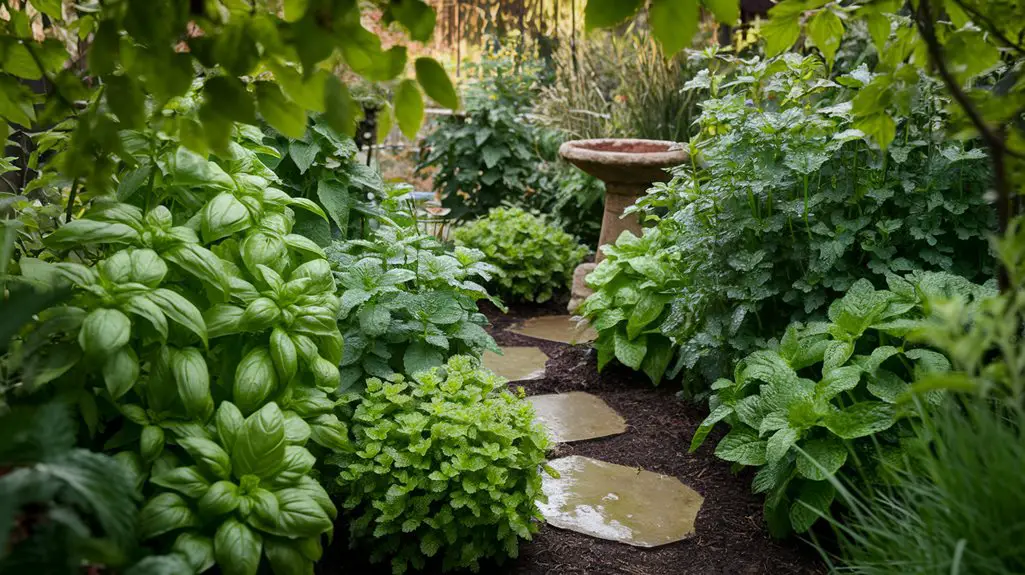
A new building next door or a growing tree can leave a carefully planned herb garden in the shade. You've likely faced similar challenges with shaded garden areas that seem impossible to cultivate.
Growing herbs without abundant sunlight isn't straightforward, but it's far from impossible when you apply the right techniques. Understanding light patterns, selecting appropriate varieties, and implementing strategic growing methods can transform those challenging spots into productive herb havens.
On this page
Selecting Shade-Tolerant Herbs for Your Garden
While planning your shaded herb garden, it's essential to choose species specifically adapted to low-light conditions. Focus on herbs that naturally thrive in woodland environments or forest understories.
Mint family members—including peppermint, spearmint, and lemon balm—perform exceptionally well with only 3-4 hours of filtered sunlight daily.
Select woodland natives like sweet woodruff and wild ginger for ground coverage in densely shaded areas receiving less than 2 hours of direct light.
For partial shade (4-6 hours of dappled light), consider chervil, parsley, cilantro, and Vietnamese coriander. These leafy herbs often outperform their sun-grown counterparts in flavor complexity.
Avoid Mediterranean herbs such as rosemary, thyme, and sage, which require 6+ hours of direct sunlight and excellent drainage to develop proper essential oil concentrations.
Maximizing Limited Light With Strategic Placement
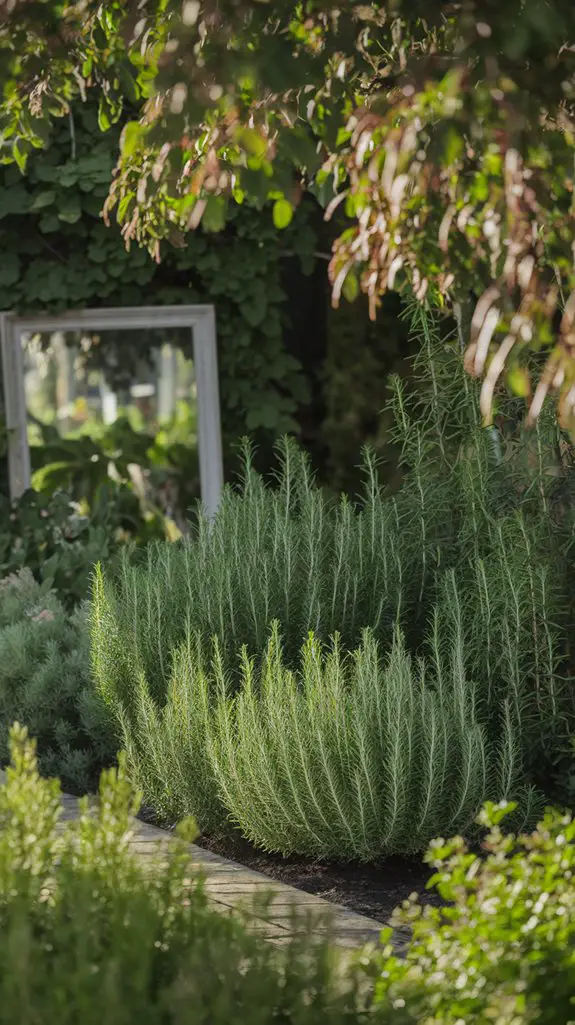
Strategic placement of herb specimens constitutes the foundation of successful shade gardening, as proper positioning can dramatically increase available light exposure.
Arrange taller plants at the northern boundary to prevent additional shading of smaller varieties. Install reflective surfaces—white pebbles, light-colored mulch, or mirrored panels—to redirect ambient light toward foliage.
Consider vertical gardening techniques by mounting herbs on south-facing walls where they'll receive maximum available sunlight. You'll also benefit from positioning plants with higher light requirements at the periphery of shaded areas where they can capture dappled sunlight.
Utilize terraced arrangements to prevent taller specimens from blocking light to shorter herbs.
Monitor seasonal sun patterns and adjust placements accordingly—areas receiving morning eastern light are often ideal for most shade-tolerant culinary herbs, providing essential photosynthesis hours while protecting against harsh afternoon exposure. Additionally, incorporating vertical garden solutions can further enhance your herb garden's light access and aesthetic appeal.
Soil Preparation Techniques for Shaded Herb Growth
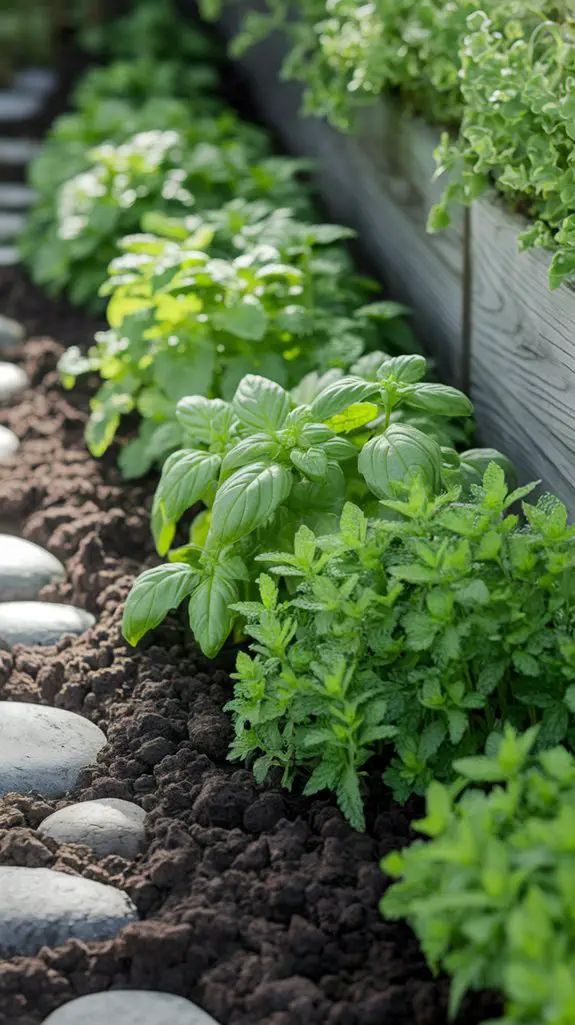
Proper soil preparation represents the cornerstone of successful herb cultivation in shaded environments, where nutritional deficiencies often compound limited photosynthesis capacity.
You'll need to amend your soil with higher percentages of organic matter—aim for 30-40% composition through the addition of leaf mold and well-rotted compost.
Adjust soil pH to 6.0-6.8, the ideal range for nutrient availability in low-light conditions. Incorporate mycorrhizal fungi to enhance root nutrient absorption efficiency.
While traditional garden beds work, consider raised beds to improve drainage, as shaded areas typically retain moisture longer.
Pre-charge your soil with slow-release organic fertilizers high in potassium and phosphorus (NPK ratio of 5-10-10) to compensate for reduced natural energy production.
Test soil drainage by digging a 12-inch hole; proper soil should empty within 4-6 hours. Additionally, companion planting techniques can further maximize the benefits of your shaded herb garden by optimizing plant interactions and resources.
Container Gardening Solutions for Movable Shade Management
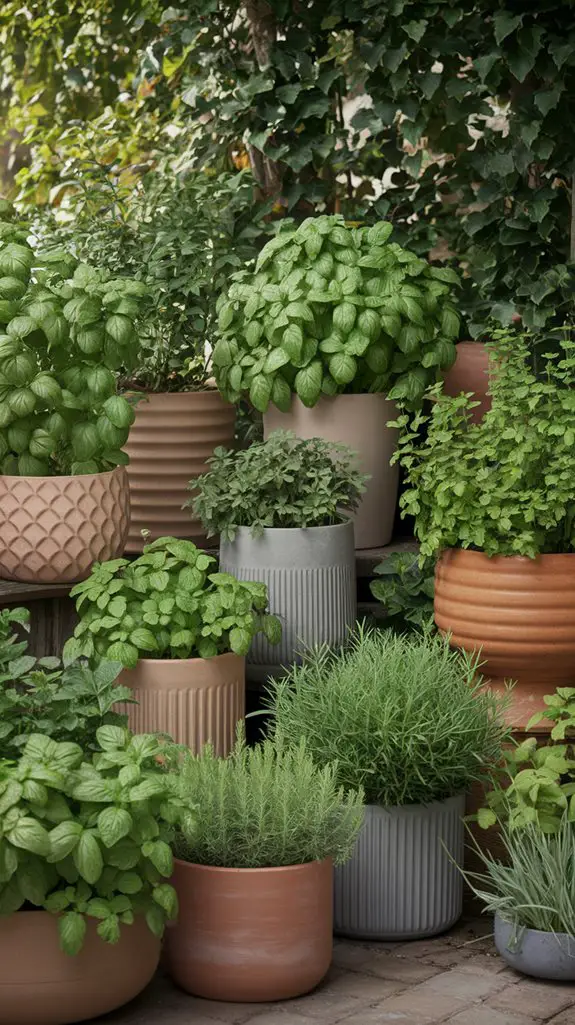
Container gardening offers a dynamic solution for herb cultivation in variable light conditions, enabling you to circumvent the limitations of permanent shade.
Select lightweight, weather-resistant containers with adequate drainage holes—ceramic retains moisture longer, while terracotta allows soil to dry more rapidly.
Opt for 12-16" containers on wheeled platforms for herbs requiring 4-6 hours of direct sunlight. Position containers initially where morning sun penetrates, then relocate to protect sensitive varieties during intense midday exposure.
Soil mixtures should contain 40% compost, 40% potting soil, and 20% perlite for ideal drainage in shade conditions.
For vertical space utilization, implement tiered container systems with shade-tolerant varieties (mint, chives) on lower levels and sun-loving herbs (basil, thyme) positioned at the top to maximize light capture. Additionally, consider incorporating versatile folding seating to create a comfortable gardening area that allows for easy movement and adjustments as your plants thrive.
Water and Moisture Considerations in Low-Light Areas
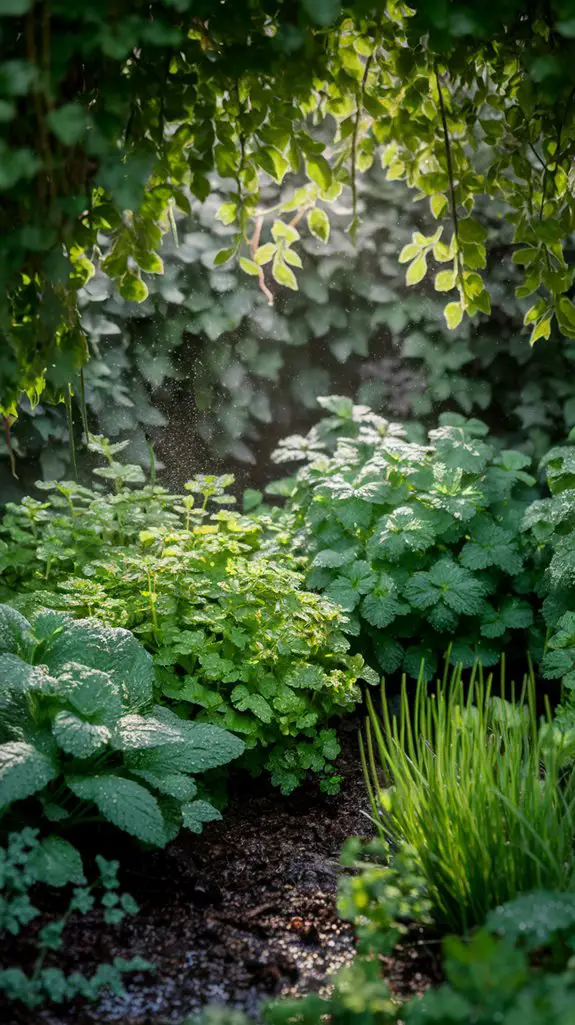
Maintaining the delicate moisture balance presents three distinct challenges in shaded herb gardens, where evaporation is slower than in full sun. You'll need to adjust watering frequency, monitor soil saturation, and implement drainage solutions.
| Shade Level | Watering Frequency | Primary Concern |
|---|---|---|
| Light | Every 4-5 days | Surface drying |
| Medium | Weekly | Root rot risk |
| Deep | 8-10 days | Fungal growth |
| Dappled | 5-7 days | Uneven moisture |
Use moisture meters to monitor soil at 2" depth before watering. Apply water directly to the root zone rather than foliage to minimize fungal disease vectors. Install drainage tiles beneath containers, and incorporate 20% perlite into potting mixes to prevent waterlogging in these cooler, slower-drying conditions.
Pruning Practices for Healthy Herbs in Shade
Pruning herbs in shade environments follows different principles than sun-exposed specimens, as shade-grown plants typically develop elongated stems with fewer lateral branches. You'll need to prune more judiciously, removing no more than 20% of foliage at once to prevent stress on these already light-deprived plants.
Focus on eliminating leggy growth by cutting just above leaf nodes to encourage lateral branching. For woody herbs like rosemary and sage, use bypass pruners to make clean 45-degree cuts that prevent moisture accumulation.
During winter dormancy, avoid heavy pruning of shade herbs, as they'll recover more slowly than their sun-bathed counterparts. Implement monthly maintenance trimming rather than seasonal heavy cuts.
Remove any yellowing or spotted leaves immediately, as fungal issues spread rapidly in shade's inherent moisture and reduced air circulation. Additionally, incorporating beneficial insects into your herb garden can further enhance plant health and resilience.
Companion Planting Strategies for Shaded Herb Success
Effective companion planting in shade environments requires strategic combinations that optimize limited light resources while creating mutually beneficial relationships between herbs.
Consider vertical spacing and complementary root structures to maximize growing area efficiency while minimizing competition.
- Pair shallow-rooted herbs like thyme and oregano with deeper-rooted varieties such as lovage or valerian to utilize different soil strata.
- Combine aromatic pest deterrents like mint and lemon balm with vulnerable herbs like parsley and chives to create natural protection zones.
- Integrate nitrogen-fixing companions such as sweet pea alongside heavy feeders like sage and rosemary to improve soil fertility naturally.
When designing your shade-tolerant herb groupings, prioritize plants with similar moisture requirements but varying heights to create beneficial microclimates that enhance overall garden resilience. Additionally, understanding companion planting principles can lead to more productive herb gardens even in shaded areas.
Conclusion
Your shaded herb garden isn't just possible—it's promising. By implementing these seven techniques, you'll create a microclimate where strategically placed reflective surfaces bounce extra light onto your plants.
This additional illumination directly translates to improved photosynthesis rates in your shade-tolerant herbs. Remember to adapt your care techniques seasonally, adjusting watering frequency and light-optimization strategies as daylight hours fluctuate throughout the year.
