
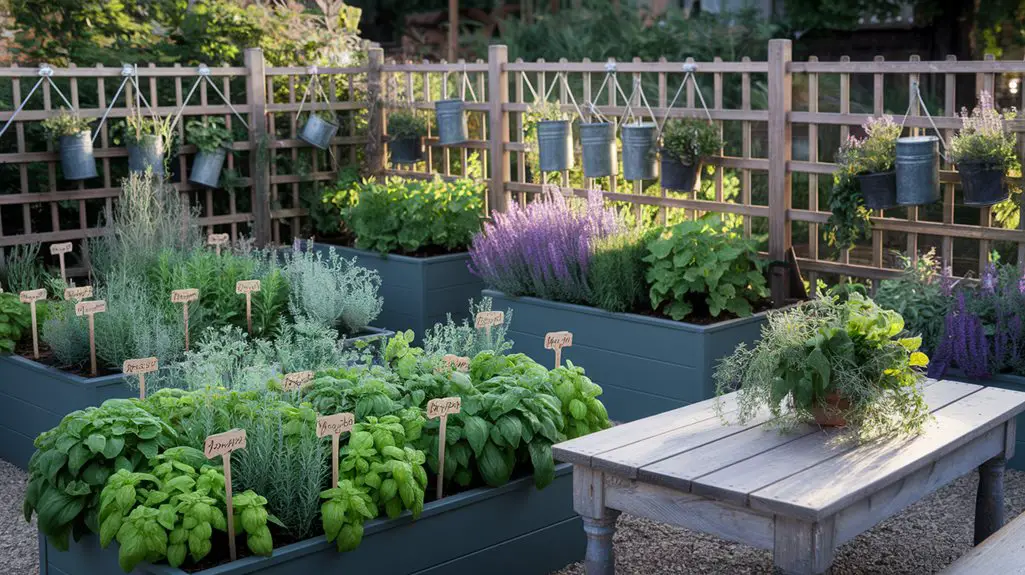
Companion planting techniques can transform your herb garden into a thriving ecosystem where plants naturally repel pests and enhance each other's growth. You'll find that basil planted near tomatoes improves their flavor, while chives deter aphids from your parsley.
These symbiotic relationships not only reduce the need for chemical interventions but also create visually striking arrangements where cascading thyme complements upright rosemary. The strategic grouping of complementary herbs will elevate both your garden's productivity and your culinary creations.
On this page
Space-Saving Vertical Herb Gardens for Small Kitchens
When space is at a premium in urban dwellings, vertical herb gardens offer an ingenious solution for food enthusiasts who refuse to compromise on fresh flavors.
You'll find that repurposing shoe organizers, pallets, or tiered planters transforms bare walls into productive growing spaces.
Consider magnetic planters for refrigerator sides or tension rods with suspended pots between kitchen windows.
Stackable modular systems utilize corners efficiently, while wall-mounted rails with hanging containers create a functional herb display.
For ideal growth, position your vertical garden near a south-facing window.
Select herbs based on your cooking preferences—basil, thyme, and mint thrive in these confined conditions.
Additionally, incorporating creative vertical garden ideas can enhance both aesthetics and functionality in your kitchen space.
Remember to group plants with similar watering needs together to simplify maintenance and guarantee your culinary arsenal remains vibrant year-round.
Upcycled Container Gardens: From Tea Tins to Mason Jars
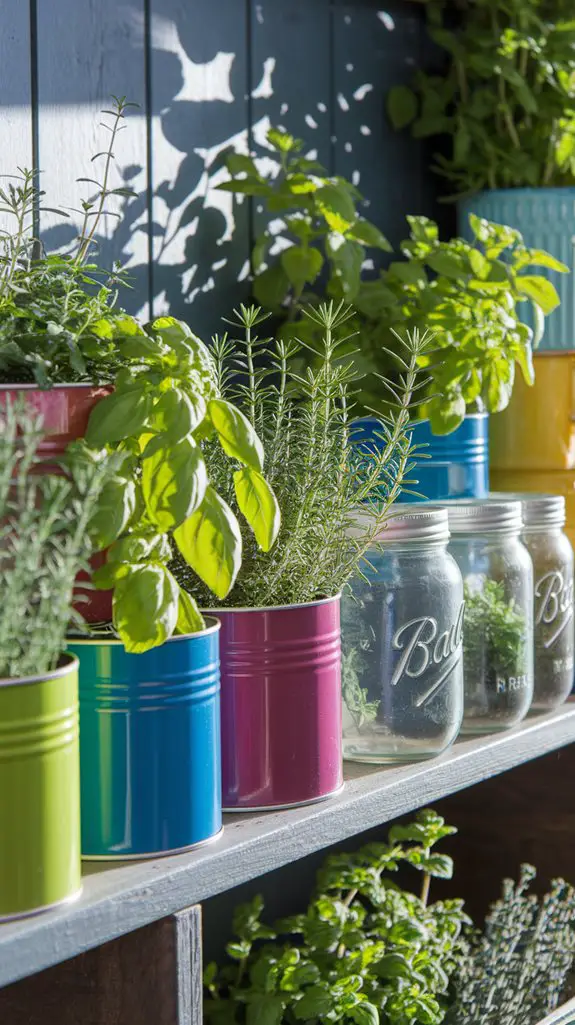
Transforming everyday household items into charming herb containers offers five distinct advantages for both your kitchen aesthetics and environmental footprint. You'll reduce waste, save money, and create uniquely personalized growing spaces that showcase your creativity. Additionally, using raised garden beds can enhance your gardening experience by providing improved soil drainage and easier access for maintenance.
| Container | Best Herbs | Drainage Needs |
|---|---|---|
| Mason Jars | Basil, Mint | Pebble layer required |
| Tea Tins | Thyme, Oregano | Punch holes in bottom |
| Wine Bottles | Chives, Cilantro | Cut horizontally, add rocks |
| Coffee Cans | Rosemary, Sage | Multiple drainage holes |
| Wooden Crates | Parsley, Dill | Natural gaps between slats |
Before repurposing any container, verify it's thoroughly cleaned. For items that held food, sanitize with vinegar solution.
Metal containers should be lined with plastic to prevent mineral leaching. Position your upcycled gardens near windows for ideal sunlight exposure.
Chef-Inspired Herb Groupings by Cuisine
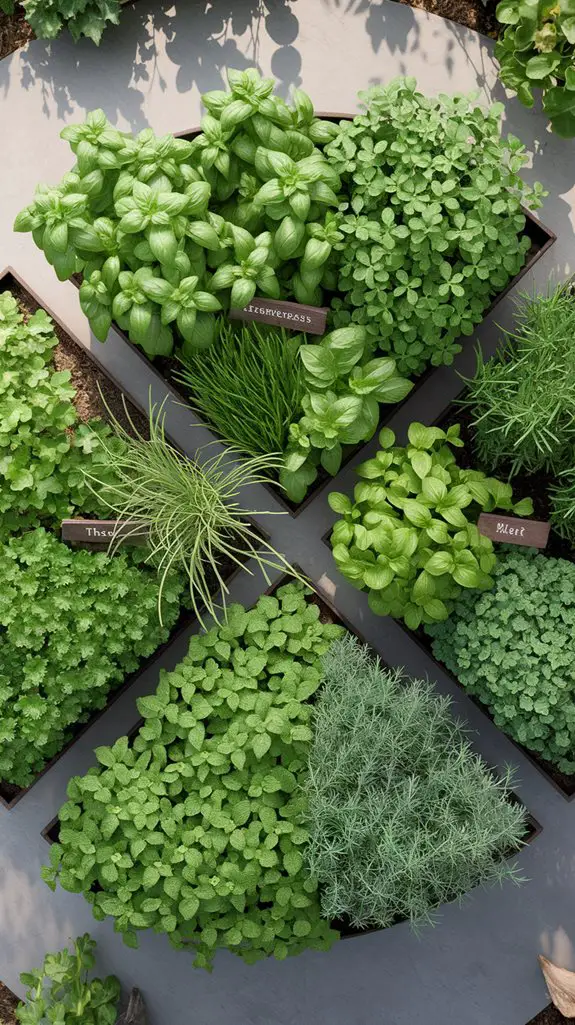
Organize your herbs according to the cuisines you love most to streamline your cooking process.
For Mediterranean cooking, group basil, oregano, thyme, and rosemary together—these sun-loving herbs share similar growing requirements.
Asian cuisine enthusiasts should plant cilantro, Thai basil, lemongrass, and mint, while French cooking demands parsley, tarragon, chervil, and chives.
Mexican cuisine thrives with cilantro, epazote, oregano, and chile peppers.
For Indian dishes, cultivate fenugreek, curry leaf, mint, and coriander.
Each grouping not only simplifies harvesting but also inspires authentic recipe creation. Additionally, consider creating a sustainable herb garden to enhance your culinary adventure while being environmentally friendly.
These strategic plantings guarantee you'll have precisely the right herbs on hand when culinary inspiration strikes.
Indoor Hydroponic Systems for Year-Round Fresh Herbs
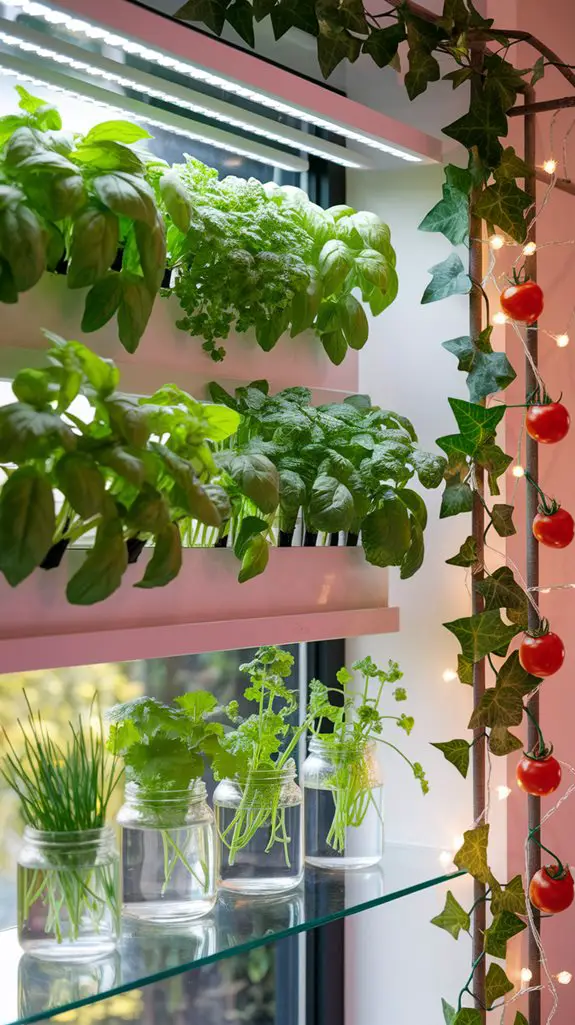
For food lovers unwilling to surrender fresh herbs to seasonal limitations, hydroponic systems offer an elegant solution for year-round indoor cultivation. These soil-free setups use nutrient-rich water solutions to support robust herb growth regardless of outdoor conditions.
| System Type | Price Range | Space Required | Maintenance Level |
|---|---|---|---|
| AeroGarden | $100-300 | Countertop | Low |
| Nutrient Film | $150-400 | Wall-mounted | Medium |
| Deep Water Culture | $50-150 | Shelf space | Low |
| Tower Garden | $250-500 | Floor space | Medium |
You'll find these systems particularly valuable during winter months when outdoor gardens lie dormant. Most hydroponic units feature built-in grow lights that provide ideal spectrum illumination for photosynthesis, while programmable timers automate watering cycles, minimizing your daily involvement while maximizing yield.
Window Sill Gardens: Maximizing Natural Light
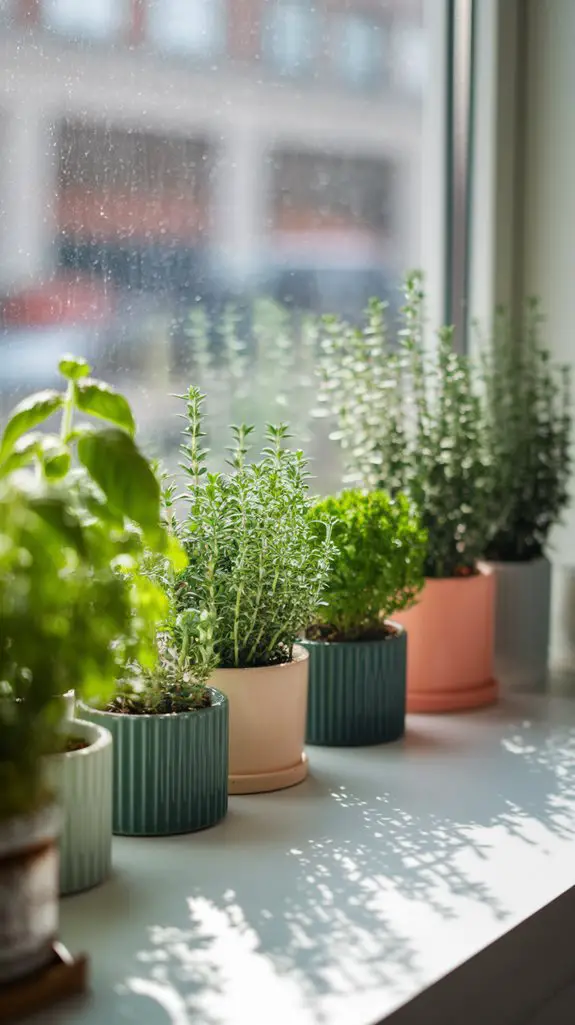
Window sill gardens represent the perfect marriage of practicality and aesthetics for culinary herb enthusiasts with limited space.
To maximize natural light, position your herbs in south-facing windows where they'll receive 6-8 hours of sunlight daily. East or west exposures work well for herbs requiring moderate light like mint and lemon balm.
Choose transparent containers with drainage holes to prevent root rot, and rotate plants weekly to guarantee even growth. Supplement natural light with small LED grow lights during winter months when daylight hours diminish.
For best results, group herbs with similar light requirements together: place basil, rosemary and thyme in brightest spots, while parsley and chives can tolerate partial shade.
Consider tiered shelving or hanging planters to capitalize on vertical space while maintaining each plant's access to sunlight. Additionally, small herb garden ideas can help you creatively utilize every inch of space in your apartment.
Edible Landscape Design: Integrating Herbs Into Your Yard
Transforming your ordinary yard into an edible landscape allows you to seamlessly blend functionality with beauty while ensuring fresh herbs are always within reach.
Consider replacing traditional ornamental borders with aromatic rosemary or lavender, which offer both visual appeal and culinary value. Thyme makes an excellent ground cover between stepping stones, releasing its fragrance when walked upon.
Plant sage and oregano alongside flowering perennials for textural contrast, or integrate chives and mint as accent plants near patios where their scent can be enjoyed. For structure, bay laurel shrubs provide evergreen focal points.
Don't overlook vertical spaces—trailing nasturtiums (with edible flowers) can cascade from hanging baskets or wall planters. Additionally, incorporating companion planting techniques can enhance growth and deter pests, ensuring a thriving herb garden.
Remember to position herbs based on both aesthetic composition and their growing requirements for sunlight, water, and soil drainage.
Portable Rolling Herb Carts for Patio and Deck
Portable herb carts represent the perfect marriage of versatility and practicality for any deck or patio gardening approach.
These mobile gardens allow you to follow ideal sunlight patterns throughout the day while providing easy access for harvesting and maintenance. Constructed with weather-resistant materials, quality carts offer multiple growing tiers and often include convenient storage for tools and supplies.
When selecting your rolling herb cart, prioritize these essential features:
- Multi-directional wheels with locking mechanisms to secure your garden in place
- Adjustable shelving to accommodate herbs of varying heights and root depths
- Integrated drainage systems that prevent waterlogging while protecting your deck surface
You'll appreciate the space-saving efficiency these carts provide, particularly in apartments or homes with limited outdoor areas. Additionally, raised garden beds can maximize small spaces by utilizing vertical growing space effectively.
Themed Herb Gardens: Cocktail, Tea, and Pizza Collections
While rolling herb carts offer mobility and convenience, themed herb gardens add purpose and personality to your culinary landscape.
Create a cocktail collection with mint, lemon verbena, and lavender for impressive drinks. Designate a tea garden with chamomile, lemon balm, and peppermint for calming brews throughout the day.
Pizza herb enthusiasts should cultivate oregano, basil, thyme, and rosemary—essential Mediterranean flavors that transform ordinary pies into gourmet creations.
You'll appreciate how these specialized collections streamline your harvesting process. Additionally, backyard vegetable gardening can enhance your overall gardening experience by providing more growing options.
Arrange each themed garden in separate containers or zones, labeling plants clearly to maintain organization.
Consider companion planting principles within each theme; mint and basil thrive near each other, while rosemary prefers drier conditions.
You'll maximize both aesthetics and yield by grouping herbs according to their culinary purpose and growing requirements.
Self-Watering Solutions for Low-Maintenance Herb Gardens
For busy food enthusiasts who can't water plants daily, self-watering solutions offer the perfect balance between herb garden maintenance and culinary convenience.
These systems deliver consistent moisture to your herbs, ensuring ideal growth while minimizing your time commitment.
Three effective self-watering options include:
- Wicking systems – Simple setups using cotton rope or fabric strips that draw water from a reservoir to plant roots.
- Water reservoirs – Containers with built-in water chambers that gradually release moisture as needed.
- Hydroponics – Advanced systems circulating nutrient-rich water directly to roots without soil.
Select containers with proper drainage and water indicators to prevent overwatering. Maintaining optimal moisture levels is crucial for healthy herb growth and can easily be achieved with these self-watering methods.
For extended periods away, consider adding water-retaining crystals to your soil mixture. These absorb excess moisture and release it gradually, extending time between refills.
Conclusion
Your herb garden isn't just a collection of plants—it's your culinary arsenal. Whether you've created a vertical masterpiece in your kitchen or a themed oasis on your patio, you've revealed nature's flavor laboratory.
These living ingredients will transform ordinary meals into extraordinary experiences. Embrace the rhythmic cycle of planting, harvesting, and creating. Your relationship with food has forever changed; you're now both chef and gardener, architect and artist.
