
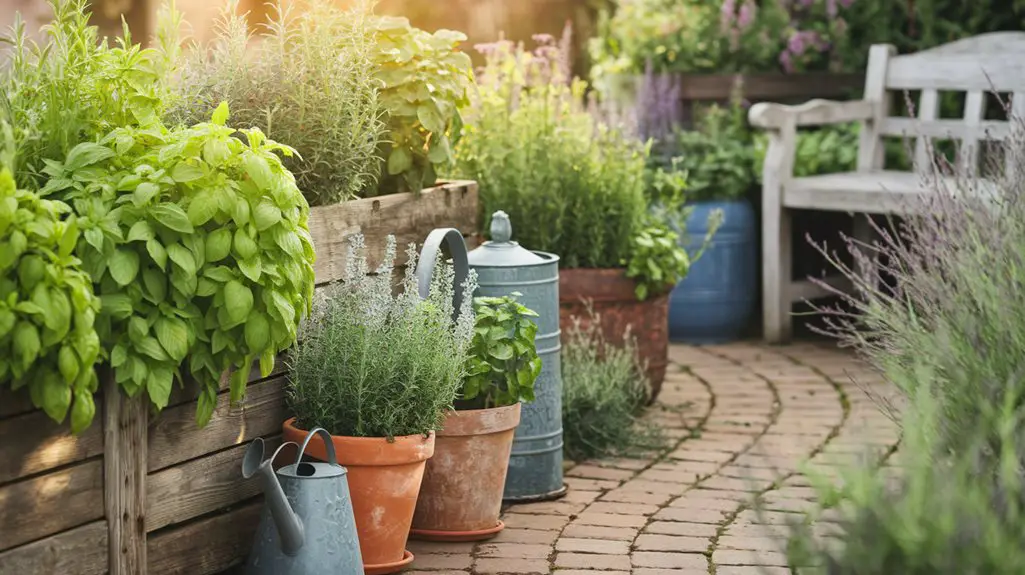
You don't need sprawling acreage or expensive materials to create a stunning rustic herb garden. With thoughtful planning and a few vintage elements, you'll transform even a modest space into a functional garden that exudes countryside charm.
Start by selecting a sunny location, then incorporate weathered wood borders, antique containers, and natural pathways to achieve that coveted rustic aesthetic. The secret lies in balancing visual appeal with practical growing conditions for your carefully chosen herb collection.
On this page
Choosing the Perfect Location for Your Rustic Herb Garden
While the aesthetic appeal of a rustic herb garden might initially draw your focus, selecting the ideal location represents the most critical decision you'll make during the planning process. Most herbs require 6-8 hours of direct sunlight daily, so prioritize south-facing areas with minimal shade interference.
Assess soil drainage capabilities, as herbs typically prefer well-drained conditions to prevent root rot. Consider proximity to your kitchen for convenient harvesting—ideally within 20-30 feet.
Protection from strong winds will safeguard delicate plants while still allowing sufficient air circulation to deter fungal diseases.
Monitor the intended location throughout a full day to identify microclimates. Areas near stone walls or pathways offer thermal benefits, gradually releasing stored heat to extend growing seasons in cooler regions. Additionally, using raised garden beds can enhance soil drainage and improve accessibility for herb maintenance.
Essential Herbs for a Charming Country Garden
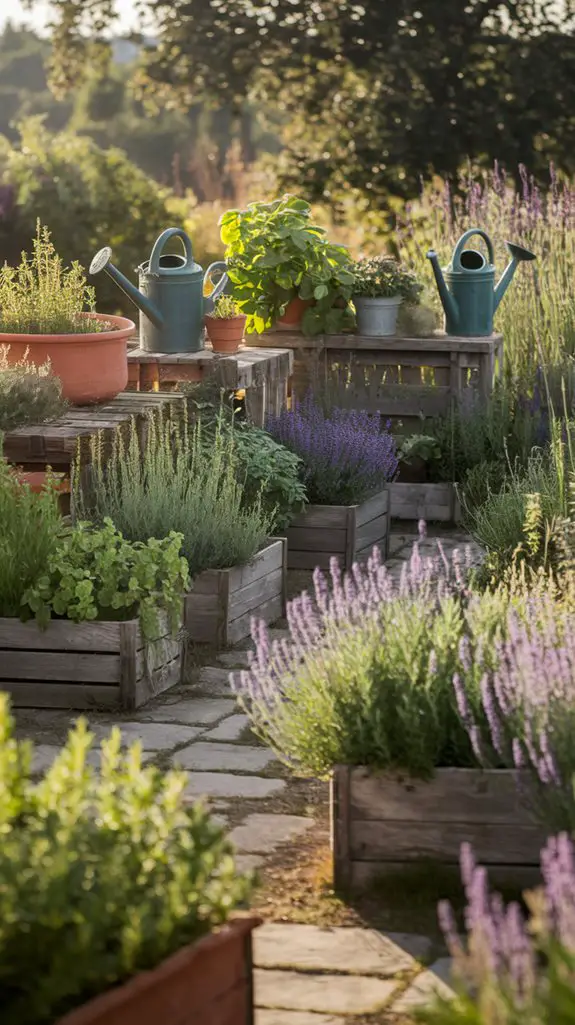
Once you've selected the perfect sun-drenched location for your herb garden, you'll need to populate it with varieties that embody rustic charm while offering practical benefits.
Begin with classic Mediterranean herbs: rosemary and lavender provide structural elements with their woody stems, while thyme and oregano create textural ground cover.
Include sage, with its velvety leaves, as a cornerstone plant that attracts pollinators. Chamomile and lemon balm add delicate flowers and soothing fragrances essential to country garden ambiance.
For vertical interest, consider bronze fennel, which reaches 5-6 feet with feathery foliage.
Don't overlook heritage varieties like purple basil and borage—their unique characteristics elevate both aesthetic appeal and culinary applications. Growing herbs organically promotes sustainable gardening practices, benefiting both your garden and the environment.
When arranging, position taller specimens northward to prevent shadowing smaller plants, ensuring ideal growth conditions for your entire herb collection.
Repurposing Vintage Containers as Herb Planters
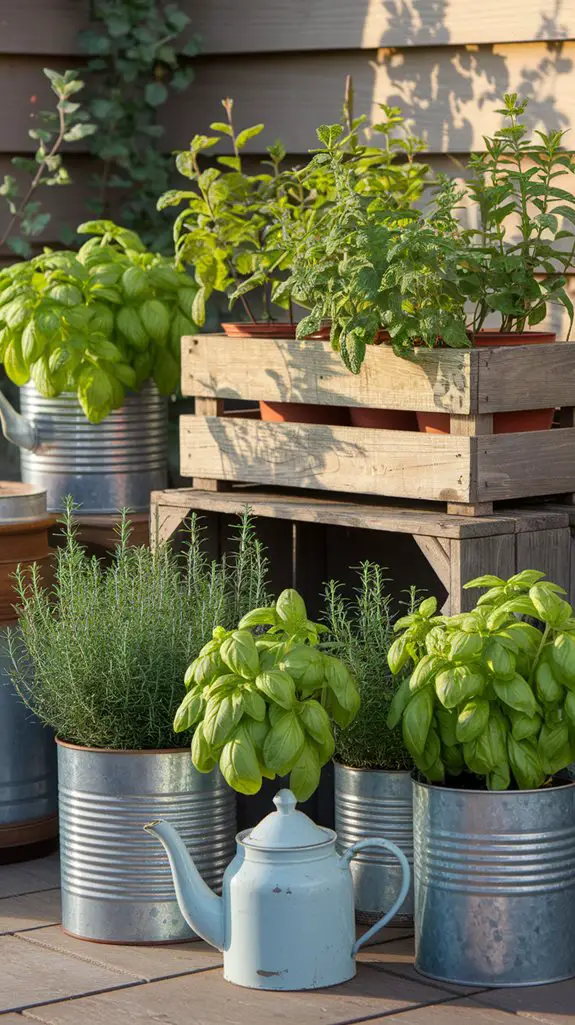
Repurposed vintage containers offer three distinct advantages for herb gardening: authentic rustic aesthetic, sustainable materials usage, and microclimate customization.
Wooden crates, galvanized buckets, and ceramic crocks provide excellent drainage while complementing countryside design sensibilities. Ascertain all containers have adequate drainage holes to prevent root rot.
Consider material properties when pairing containers with herbs. Terracotta naturally wicks moisture, making it ideal for drought-tolerant Mediterranean herbs like rosemary and thyme. Conversely, metal containers heat quickly, benefiting heat-loving basil but potentially scorching delicate cilantro roots.
Transform unexpected items into herb planters: antique toolboxes, enamelware pitchers, and worn boots.
Create visual interest by varying container heights—mount colanders on walls, hang wire egg baskets from porch beams, or elevate wooden drawers on sturdy stumps. Additionally, using edible landscaping ideas can help you maximize the functionality of your garden while enhancing its beauty.
Natural Pathways and Borders for Rustic Appeal

Natural pathways and borders serve as foundational elements that define your herb garden's structure while enhancing its rustic character. Consider gravel pathways edged with reclaimed brick or weathered fieldstone for authentic appeal.
Alternatively, bark mulch offers a softer aesthetic that suppresses weeds while decomposing gradually to nourish surrounding soil.
For borders, incorporate wattle fencing woven from willow or hazel branches—a traditional technique that creates flexible, biodegradable boundaries.
Log sections partially buried vertically create striking edging that naturally weathers over time. Reclaimed railroad ties or rough-hewn timber lengths provide substantial borders, though make certain they're untreated if adjacent to edibles.
When planning pathway width, allow 24-30 inches for comfortable navigation with gardening tools.
Install landscape fabric beneath path materials to inhibit weed growth while maintaining the garden's naturalistic appearance. Additionally, selecting pathways made from eco-friendly options can further enhance the sustainability of your garden design.
Weather-Worn Wood Elements and Structures
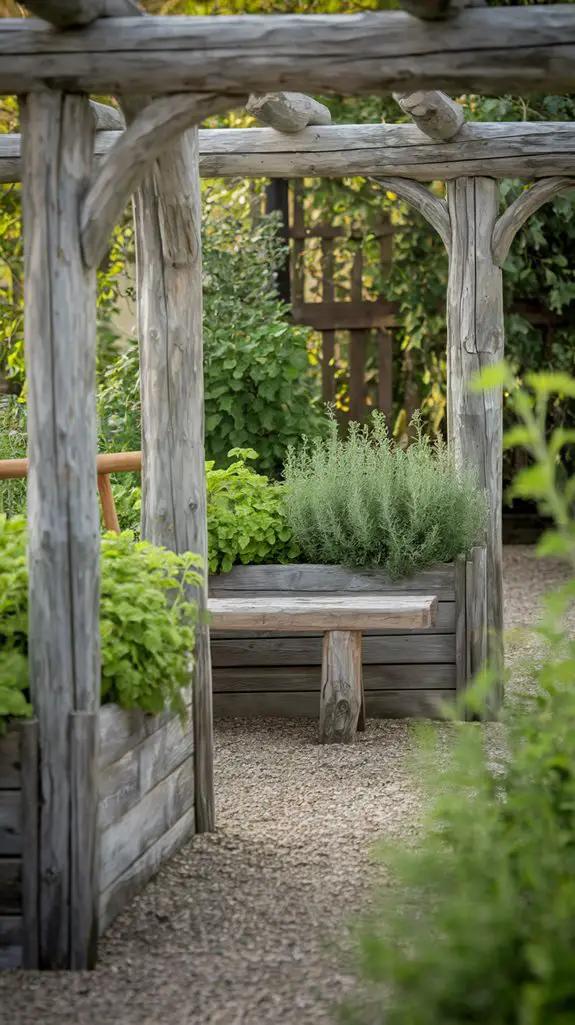
Weather-worn wood elements form the backbone of any authentic rustic herb garden, providing both structural integrity and visual appeal while connecting the space to traditional agricultural practices.
Incorporate reclaimed barn boards for raised beds, where the silvery patina contrasts beautifully with vibrant herbs. Old wooden ladders, positioned horizontally, can serve as innovative trellises for climbing varieties like nasturtium or thyme.
Consider installing a weathered cedar pergola to create dappled shade for shade-tolerant herbs such as mint and chervil. Driftwood pieces make excellent visual anchors when positioned strategically among plantings.
You'll find that oak wine barrel halves offer ideal containers for Mediterranean herbs that require excellent drainage. For tools and harvests, mount a distressed wooden shelf unit with iron brackets—functional storage that enhances your garden's rustic aesthetic. Additionally, utilizing companion planting techniques can help maximize the health and yield of your herbs in this rustic setting.
Creating Herb Garden Focal Points With Antique Tools
Antique farm tools transform ordinary herb gardens into enchanting storytelling spaces while providing distinctive focal points that draw the eye and spark conversation.
Integrate vintage hand plows as garden dividers or mount rust-patinaed sickles and scythes on weathered fencing as artistic backdrops. You'll find that old metal watering cans, strategically placed among thyme and sage, create visual hierarchy and historical resonance.
For maximum impact, position a vintage wheelbarrow as a planter for cascading oregano or mint, ensuring the tool's original handles remain visible.
Consider suspending antique garden implements from shepherd's hooks—hand trowels, cultivators, and dibbers work particularly well. When selecting tools, prioritize those with wooden handles that complement your garden's rustic aesthetic, and apply linseed oil annually to preserve their authentic character. Incorporating minimalist outdoor seating can enhance the overall ambiance of your herb garden, creating a serene space for relaxation and enjoyment.
Seasonal Maintenance for a Thriving Rustic Herb Collection
Maintaining a rustic herb garden requires deliberate seasonal attention that aligns with each plant's natural growth cycle and dormancy periods.
In spring, prune winter damage, apply organic compost, and divide perennials like chives and mint that have become crowded. Additionally, consider incorporating culinary-inspired herbs that align with various cuisines to enhance your garden's appeal.
Summer demands consistent watering during morning hours, strategic mulching to retain soil moisture, and regular harvesting to promote continued growth. Implement a biweekly feeding schedule using diluted compost tea.
Fall maintenance includes collecting seeds from cilantro and dill, cutting back Mediterranean herbs by one-third, and potting tender varieties for indoor overwintering.
Before winter, apply a protective mulch layer around perennials, leaving crown areas exposed to prevent rot, and remove any diseased foliage to minimize pest hibernation opportunities.
Conclusion
You'll find your rustic herb garden evolves into more than just plants—it becomes a sanctuary of sensory delights. As weathered wood frames mingle with fragrant foliage, your careful cultivation transforms ordinary space into extraordinary retreat.
Remember, consistent seasonal maintenance guarantees perennial herbs return robustly while annuals find ideal growing conditions. Implement these design elements methodically, and you'll create an herb garden that's both aesthetically pleasing and functionally productive.
