
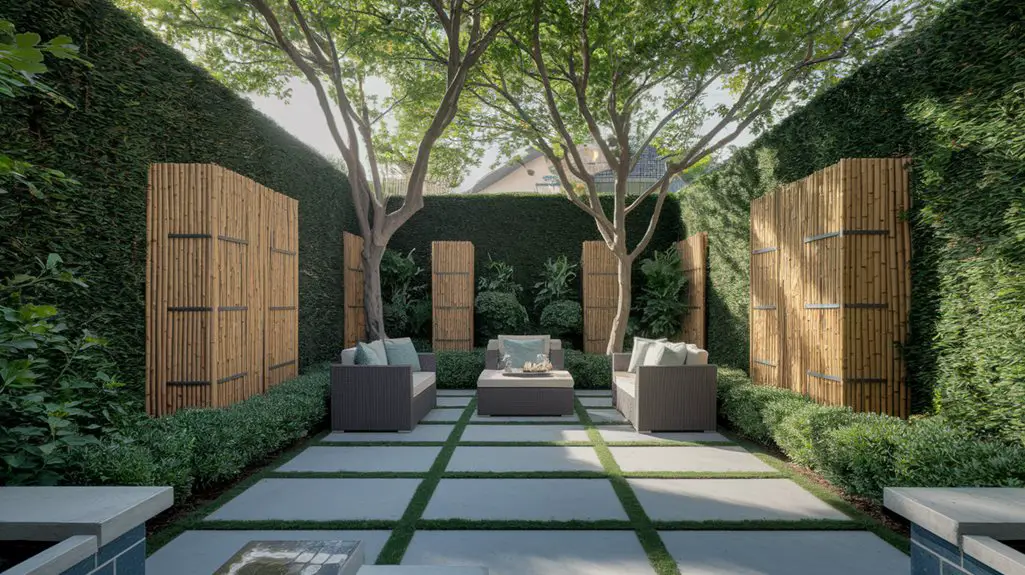
Your outdoor sanctuary should reflect your indoor comfort, yet many homeowners struggle with unwanted views and noise from neighbors. You'll find that combining strategic plantings with structural elements creates effective privacy solutions tailored to your space.
Whether you're dealing with overlooking windows or busy streets, multiple approaches exist—from fast-growing hedges to sound-dampening water features. Privacy enhancements don't just block sightlines; they transform your outdoor space into a true extension of your home.
On this page
Strategic Planting: Natural Privacy Screens
When planning for privacy in outdoor spaces, strategic planting offers one of the most aesthetically pleasing and environmentally friendly solutions available. Choose fast-growing evergreens like arborvitae or Italian cypress for year-round screening, planting them in staggered rows to create a dense barrier. Additionally, incorporating green solutions such as climbing vines can enhance the privacy screen while adding beauty and biodiversity to your backyard space.
Fence and Wall Options for Secluded Outdoor Living
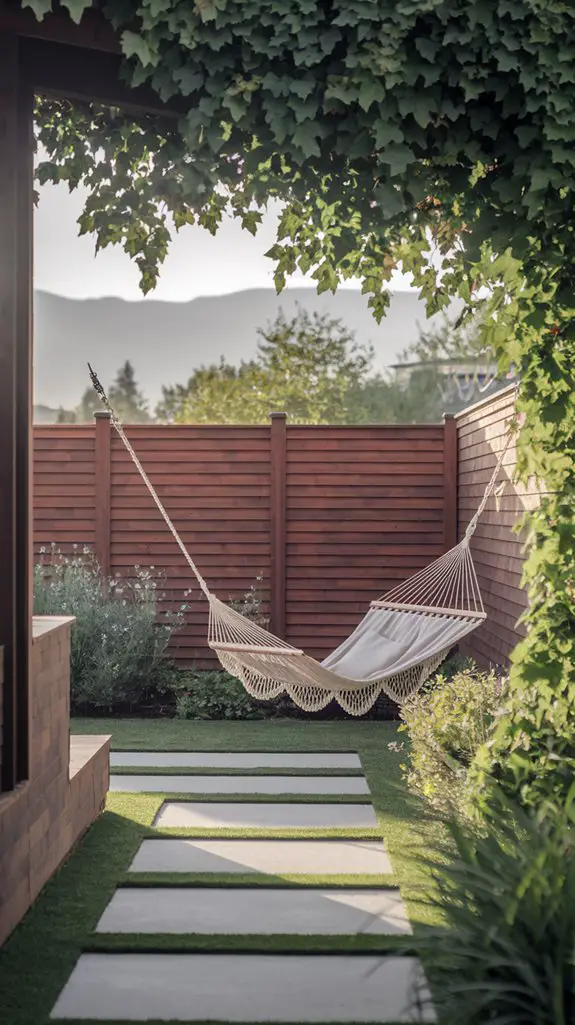
While natural plantings provide living privacy solutions, physical barriers offer immediate seclusion and architectural definition to your outdoor spaces.
Consider horizontal board fencing for modern appeal or classic pickets for traditional settings. Opt for cedar or redwood for natural resistance to decay, or composite materials for long-term durability.
For urban settings, concrete or stone walls deliver superior sound reduction while creating a robust privacy boundary. Install decorative metal panels or slatted wooden screens for partial visibility without sacrificing seclusion. These semi-transparent options maintain airflow while creating visual breaks.
Height restrictions typically range from 6-8 feet in residential zones, but check local building codes before installation. Additionally, best privacy fencing styles can enhance both aesthetics and functionality in smaller backyards.
Incorporate climbing plants or trellises to soften hard surfaces, blending built elements with natural features for a cohesive, private retreat.
Pergolas and Overhead Structures to Block Visibility
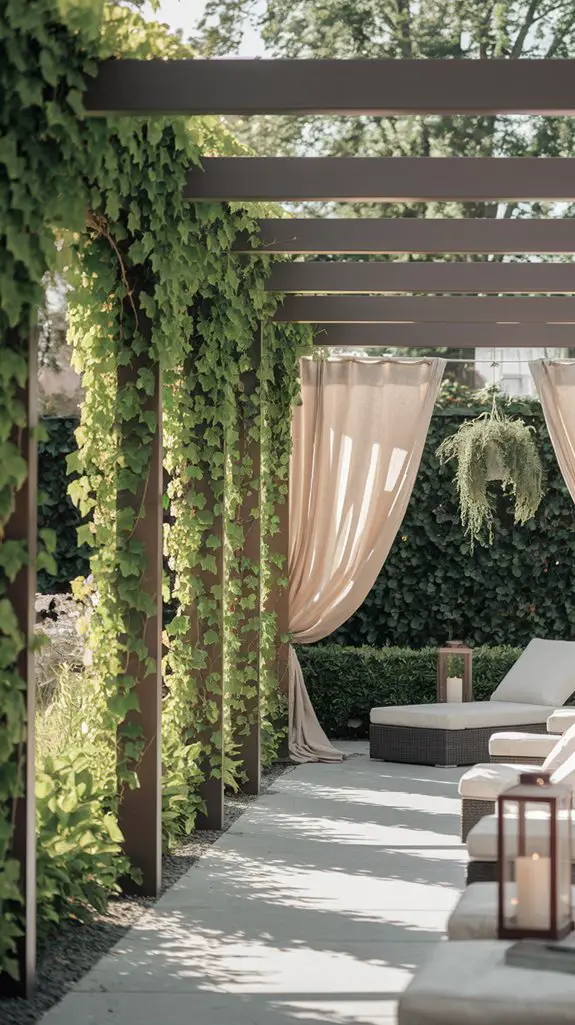
Creating a three-dimensional privacy solution, pergolas and overhead structures extend protection beyond vertical barriers. These architectural elements shield your space from overhead visibility while diffusing sunlight and creating intimate outdoor rooms. Incorporating stylish pergola designs can elevate both the aesthetic and functionality of your outdoor retreat.
| Structure Type | Privacy Level | Design Impact |
|---|---|---|
| Solid Roofing | Maximum | Bold, definitive shelter |
| Slatted Pergola | Moderate | Dappled light, airy feel |
| Retractable Canopy | Adjustable | Versatile, contemporary |
Select materials that complement your home's architecture—cedar or redwood for warmth, aluminum for modern spaces, or fiberglass for durability. Install climbing plants like wisteria or grape vines to enhance coverage naturally. For complete seclusion, add drop-down screens or outdoor curtains to pergola sides, transforming the structure into a fully enclosed retreat that remains connected to your garden landscape.
Privacy Screens and Dividers for Flexible Spacing
Three key advantages make portable privacy screens and dividers essential for modern outdoor living.
First, they offer immediate privacy without permanent installation, letting you reconfigure your space as needed.
Second, they provide targeted visual barriers without blocking airflow or light completely.
Third, they're typically more affordable than structural alternatives.
Choose from various materials based on your needs: bamboo screens offer natural aesthetics; metal panels provide durability in harsh weather; fabric panels create a soft, casual atmosphere while filtering light beautifully. Additionally, consider bespoke solutions like tailored privacy fencing that can enhance the overall design of your property.
For maximum flexibility, select screens with wheels or modular designs that connect multiple panels.
Position dividers strategically—create conversation zones, shield outdoor showers, or block sightlines from neighboring properties.
You'll transform exposed areas into intimate retreats while maintaining the open feeling that makes outdoor living so appealing.
Sound Management Techniques for Private Conversations
Although visual privacy can be achieved through screens and dividers, sound travels freely in outdoor spaces, potentially compromising private conversations. To manage sound effectively, consider installing a water feature like a small fountain—the steady noise creates a natural sound barrier that masks conversations.
Incorporating stunning water features not only enhances privacy but also boosts your home's value. Strategic placement of dense vegetation absorbs sound waves. Evergreen shrubs arranged in dense buffer zones can soften noise, though plants alone block less sound than a solid wall.
For immediate solutions, portable bluetooth speakers playing ambient background music at 60-70 decibels effectively obscure conversation details without being intrusive. Weather-resistant outdoor rugs and upholstered furniture don't just add comfort—they absorb sound rather than allowing it to bounce off hard surfaces. For technical solutions, consider weatherproof white noise machines specifically designed for outdoor installation with multiple sound profiles and adjustable volume ranges.
Lighting Design to Enhance Nighttime Privacy
While outdoor lighting typically focuses on visibility, strategic illumination can actually strengthen privacy boundaries after sunset. You'll need a thoughtful approach that balances security needs with your desire for seclusion.
- Install downward-facing path lights that illuminate only walkways without broadcasting your presence to neighbors.
- Position motion-activated fixtures at property edges to detect visitors while preventing constant illumination.
- Use targeted spotlights on specific landscape features, creating visual focal points that draw attention away from seating areas.
- Incorporate warm-toned, low-level lighting in conversation zones that keeps visibility confined to immediate surroundings.
Remember to avoid harsh floodlights that create high-contrast shadows. Instead, implement layered lighting zones with dimmers that allow you to control privacy levels based on your specific outdoor activities. Additionally, effective lighting design can transform how your outdoor space feels at night, enhancing both aesthetics and comfort.
Conclusion
You'll transform your outdoor haven by planting strategic evergreens, installing durable fencing, and adding adaptable screens. You can enhance seclusion with pergolas above, create sound barriers with water features, and design lighting that protects your privacy after dark.
Every addition serves dual purposes: beautifying your space while creating the intimate atmosphere you crave. Your perfect outdoor sanctuary awaits—private, functional, and uniquely yours.
