
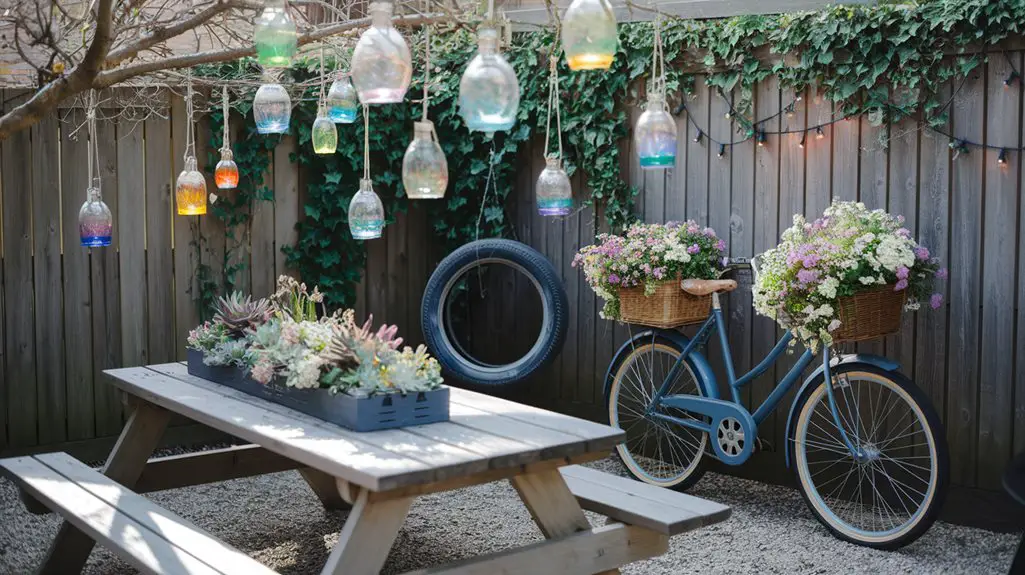
Spring offers the perfect opportunity to refresh your backyard with sustainable décor that honors the environment while creating visual appeal. You'll minimize waste and carbon footprint by transforming everyday discards into garden centerpieces and selecting native plants that thrive with minimal intervention.
Strategic placement of solar lighting can highlight these eco-conscious elements while reducing energy consumption. The following collection of renewable decoration ideas will transform your outdoor space into a sustainable sanctuary that celebrates the season's beauty.
On this page
Upcycled Container Gardens for Spring Blooms
While traditional planters serve their purpose well, upcycled container gardens offer both environmental benefits and unique aesthetic appeal for your spring blooms.
Repurpose old wooden crates, tin cans, or unused kitchen colanders to create distinctive planting vessels that reduce landfill waste.
When selecting containers, guarantee proper drainage by drilling 1/4-inch holes in the bottom. Layer the base with recycled glass pebbles or broken pottery fragments before adding organic potting mix.
Choose native flowering plants like coneflowers or black-eyed Susans that attract pollinators and require minimal water. Additionally, using renewable resources for your garden can further enhance sustainability efforts.
For vertical interest, mount old rain gutters on fence panels or transform worn boots into charming succulent holders.
You'll create an eco-friendly display that showcases your commitment to sustainability while adding vibrant color to your outdoor space.
Solar-Powered Lighting Solutions for Evening Ambiance
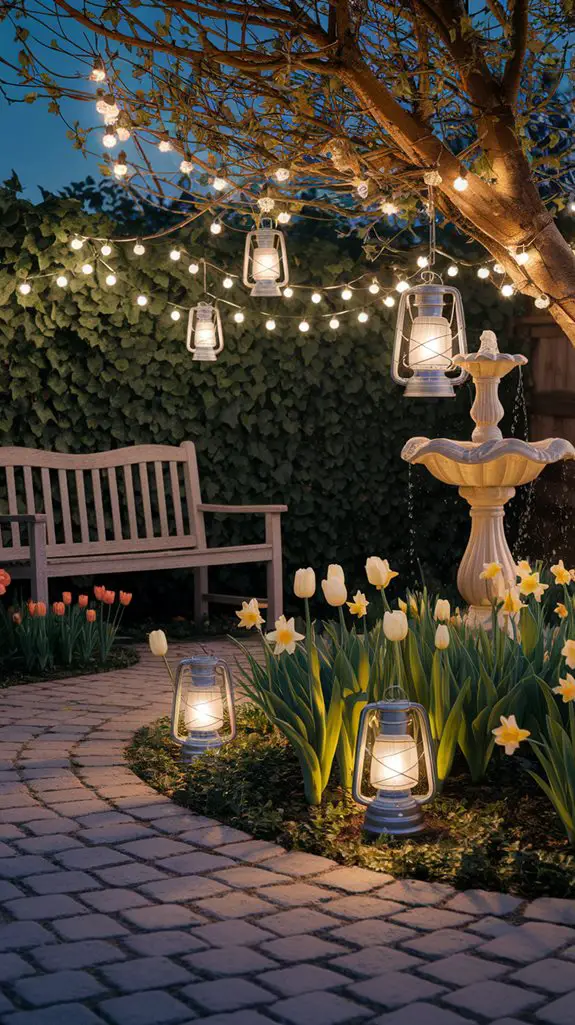
Solar-powered lighting offers the perfect sustainable solution, harnessing daylight to create evening magic without increasing your carbon footprint.
Position string lights along pergolas or fences to define boundaries with a gentle glow. Install solar pathway stakes to illuminate walkways safely while creating visual rhythm.
For dining areas, consider solar-powered pendant fixtures that collect energy throughout the day and activate automatically at dusk.
Look for fixtures with weatherproof ratings (IP65 or higher) and warm color temperatures (2700-3000K) that won't disrupt local wildlife.
Modern solar lights feature improved photovoltaic technology, providing longer illumination periods even after cloudy days—transforming your spring garden into a sustainable nighttime retreat. Additionally, these energy-efficient lighting solutions help reduce electricity costs while enhancing the beauty of your outdoor space.
Rainwater Collection Features as Decorative Elements
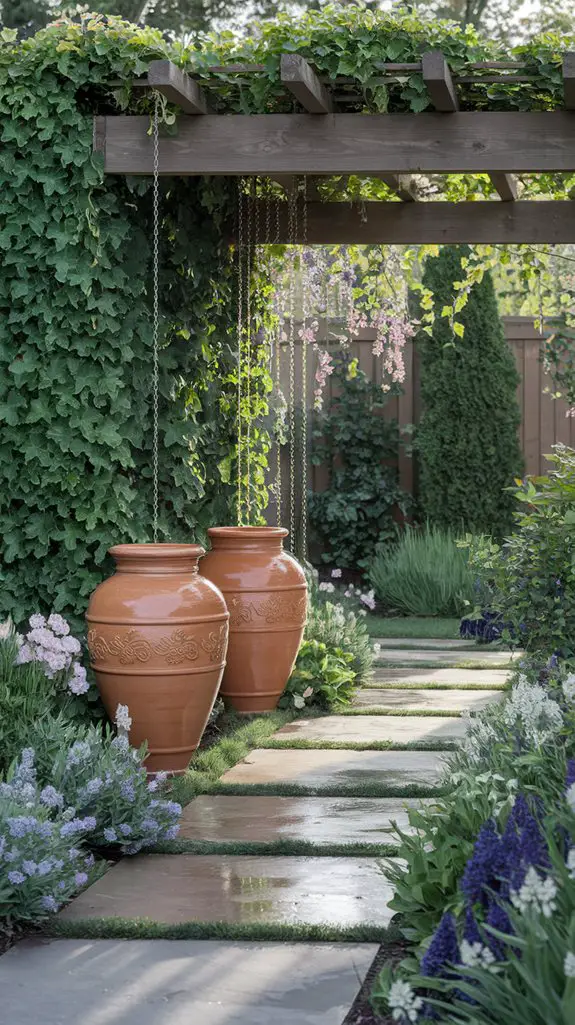
The thoughtful integration of rainwater collection systems transforms functional sustainability into artistic focal points for your spring garden.
Consider installing decorative rain chains that guide water from gutters into collection vessels, creating mesmerizing water displays during spring showers.
Ceramic or copper rain barrels add vintage charm while capturing precious precipitation for later use.
Position these near thirsty plants or incorporate them into tiered garden designs. For larger spaces, construct a rain garden with native moisture-loving plants surrounding a small basin that collects runoff.
Combine bamboo spouts with stone basins for an Asian-inspired water feature that serves dual purposes.
Paint collection containers with botanical motifs or mosaic tiles to enhance their visual appeal.
These water-saving elements reduce utility costs while elevating your garden's aesthetic during the spring renewal season. Additionally, incorporating rainwater harvesting systems not only promotes environmental stewardship but also supports sustainable landscaping practices.
Biodegradable Party Décor for Spring Gatherings
Spring entertainment naturally extends the eco-conscious approach from water collection to celebratory décor. As you plan outdoor gatherings, choose materials that decompose naturally rather than contribute to landfill waste.
Opt for plantable seed paper invitations that bloom into wildflowers once planted, signaling your commitment to sustainability from the outset.
For tabletop arrangements, consider:
- Banana leaf platters and palm leaf plates that compost within 90 days
- Cutlery crafted from avocado pits or bamboo that breaks down naturally
- Table centerpieces featuring potted herbs guests can take home and plant
These biodegradable alternatives eliminate single-use plastic waste while enhancing your aesthetic with natural textures and earthy tones. Incorporating sustainable materials into your outdoor kitchen can further enhance your eco-friendly celebration.
Your spring celebration becomes both visually stunning and environmentally responsible—proving sustainable choices don't sacrifice style.
Repurposed Materials for Charming Garden Borders
Creating distinctive garden borders from items you'd otherwise discard transforms your landscape while diverting materials from landfills.
Consider vintage wine bottles inserted upside-down along bed edges for a colorful, upcycled boundary that filters sunlight beautifully. Reclaimed brick fragments, arranged in herringbone patterns, offer classical elegance with zero environmental cost.
For coastal aesthetics, collect driftwood pieces and align them horizontally, creating a natural flow that complements ornamental grasses. Salvaged metal pieces—bicycle wheels, old tools, or industrial scrap—can be partially buried in sequence for an artistic industrial border.
Old ceramic dishes, broken but not forgotten, can be embedded vertically in soil for a whimsical, mosaic-like edge. Additionally, integrating sustainable privacy fencing into your garden not only enhances the aesthetic appeal but also promotes eco-conscious living.
Each border option creates unique microclimates for beneficial insects while expressing your commitment to sustainable garden design.
Native Plant Arrangements to Support Local Ecosystems
Embracing native plant communities in your backyard design establishes a vibrant ecological foundation that sustains local wildlife while reducing maintenance demands.
When arranging natives, mimic natural patterns by clustering species that naturally coexist in your region's ecosystems.
- Create pollinator corridors with flowering natives arranged in succession to provide continuous nectar sources from early spring through fall.
- Design rain gardens in low-lying areas using moisture-loving native species to filter runoff and recharge groundwater.
- Incorporate native grasses as architectural elements that provide winter interest, bird habitat, and deep root systems for soil stabilization.
Layer your plantings vertically—groundcovers, mid-height perennials, and structural shrubs—to maximize biodiversity in limited space.
This stratified approach mirrors natural plant communities while creating visually compelling landscapes that connect your property to the broader ecological context. Additionally, utilizing native plant landscaping can significantly enhance the resilience of your garden against pests and diseases.
Handcrafted Bird and Pollinator Habitats as Focal Points
While backyard ecosystems thrive on native plantings, they reach their full potential when you integrate thoughtfully designed habitat structures as central elements.
Consider installing mason bee houses crafted from untreated wood blocks with precisely drilled 6-8mm holes, positioned at eye level facing southeast for maximum sunlight exposure.
Butterfly puddling stations—shallow dishes filled with sand, soil, and mineral-rich water—create striking visual elements while providing essential nutrients.
For birds, repurpose fallen branches into sculptural roosting structures or craft nest boxes with species-specific dimensions.
When designing these habitats, use reclaimed materials like cedar fence planks or hollow plant stems, and incorporate them among your plantings rather than isolating them.
You'll create multi-functional focal points that serve both ecological purposes and aesthetic value, eliminating the false dichotomy between decoration and conservation. Additionally, incorporating native plants in your garden will further enhance the habitat value by attracting diverse wildlife species.
Conclusion
Your sustainable spring decorations aren't just beautiful—they're planet-saving choices. When you incorporate eco-friendly elements into your outdoor space, you're joining a growing movement.
Upcycling keeps materials in use and avoids the emissions of making new ones. As you transform your backyard this spring, you're creating a harmonious ecosystem where design meets environmental stewardship, proving that the most compelling outdoor spaces balance aesthetics with ecological integrity.
