
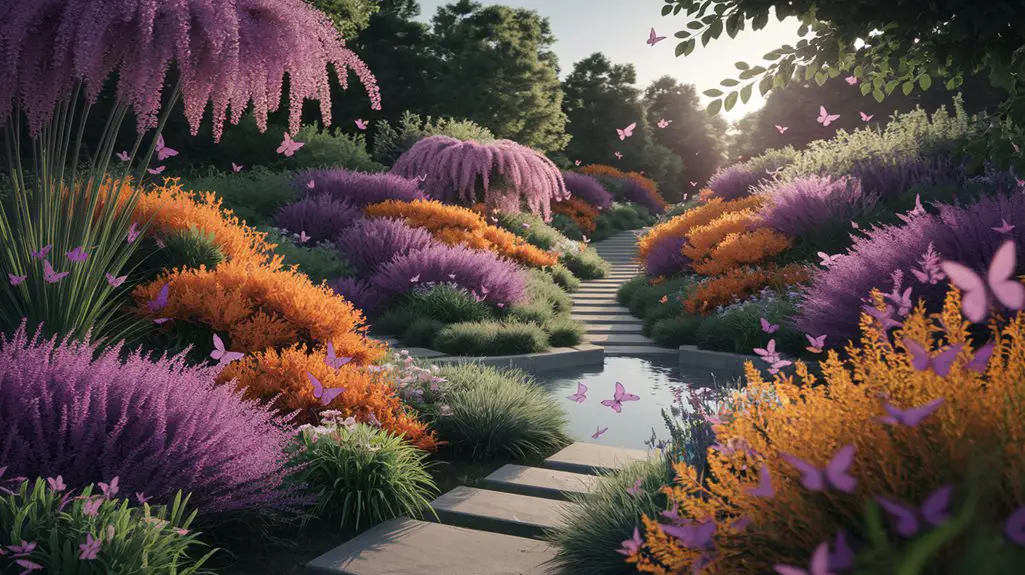
Butterfly gardens are more complex than they appear; did you know that the layout of your garden can impact the flight patterns and feeding behavior of butterflies? By choosing the right location, you'll guarantee your garden receives ample sunlight, which is essential for the solar-thermoregulation of butterflies.
Selecting native and nectar-rich plants will not only enhance local biodiversity but will also encourage butterfly visitation. There's more to take into account, including host plants and seasonal bloom cycles.
On this page
Choose the Right Location
When designing a butterfly garden, it's crucial to select the ideal location, considering factors such as sunlight exposure, wind protection, and soil quality.
Butterflies are heliophilic, meaning they require sunlight for thermoregulation and metabolic processes, so position your garden in a location with at least six hours of direct sunlight per day.
Make sure your chosen site has partial wind protection, possibly using existing structures or dense shrubbery, to prevent fragile wings from damage.
Soil quality is paramount; butterflies need nutrient-rich environments for host plant growth. Conduct a pH test of the soil to verify it's slightly acidic to neutral, promoting the best plant vitality.
Enhance drainage, as butterflies thrive in moist but not waterlogged conditions.
Selecting the right location maximizes both biodiversity and butterfly activity.
Select Native and Nectar-Rich Plants
To create a thriving butterfly garden, prioritize selecting native and nectar-rich plants, which are essential for supporting local butterfly species and their ecosystems.
Native plants have co-evolved with local butterflies, providing the specific nutrition they need. Nectar acts as an energy source for adult butterflies.
Here are three detailed tips for your butterfly garden:
- Research Local Flora: Identify plants native to your region using botanical databases or local guides. Consider species like *Asclepias tuberosa* (Butterfly Weed) or *Monarda fistulosa* (Wild Bergamot).
- Diversify Flowering Species: Integrate diverse plants to guarantee seasonal nectar availability. Choices like *Echinacea purpurea* (Purple Coneflower) and *Helianthus annuus* (Common Sunflower) offer prolonged blooms.
- Implement Layered Planting: Incorporate varied heights such as shrubs and groundcovers to create habitat complexity, appealing to different butterfly species.
Provide Host Plants for Caterpillars
Caterpillar host plants form the backbone of a successful butterfly garden by sustaining the early but essential life stages of butterflies.
When designing your garden, select specific host plants for the caterpillars of the butterfly species native to your area. Investigate which plants caterpillars need for larval feeding.
Monarch caterpillars require Asclepias spp. (milkweed), while Papilio polyxenes seek out Foeniculum vulgare (fennel) and Daucus carota (wild carrot).
Understand that caterpillars are specialists, meaning they eat only certain plants, making host plant selection vital.
By incorporating these botanical essentials, you guarantee a habitat supporting the complete life cycle from egg to adult butterfly.
You're not merely planting; you're fostering ecological interactions critical for pollinator conservation and biodiversity enhancement.
Create Shelter and Resting Spots
As you design your butterfly garden, consider integrating shelter and resting spots to enhance habitat quality. These areas provide essential microhabitats for butterflies to escape predators and harsh weather conditions.
Strategically place features to support their daily activities:
- Shrubs and Dense Foliage: Incorporate native shrubs, like Buddleia or Ceanothus, for windbreaks and roosting sites. Their dense foliage offers protection and a place for pupation.
- Leaf Litter: Create refuges by allowing leaf litter accumulation. It provides a natural layer for overwintering and predator avoidance, fostering life cycle completion.
- Rock Crevices: Position rocks or logs to create nooks. Besides providing thermoregulation opportunities, these structures mimic natural resting spaces for butterflies.
Employ these features to establish a sanctuary that elevates your garden's ecological value.
Incorporate Water Sources
Essential to any thriving butterfly garden, water sources play a critical role in their daily nutrient intake and survival. First, you'll want to take into account a shallow puddling area for butterflies to absorb salts and minerals.
Place flat stones or saucers with damp sand or soil nearby to enhance their foraging. Also, situate these locations in sunny spots for ideal thermal regulation. Make sure to replenish water daily to maintain a consistent hydration source.
Here's a quick guide:
| Water Source Type | Practical Placement |
|---|---|
| Shallow puddling basin | Sun-drenched, sheltered |
| Damp sand zones | Close to flowering plants |
| Small water dish | Among nectar-rich flora |
| Stone perches | Near puddling sites |
| Water misting | Adjacent to tree canopies |
Implement these elements, transforming your garden into an inviting butterfly oasis.
Ensure Pesticide-Free Practices
Integrating pesticide-free practices into your butterfly garden is pivotal for sustaining a healthy ecosystem. Pesticides disrupt the delicate balance of the food web and can harm butterflies at various life stages—egg, larva, pupa, and adult.
Instead, adopt natural methods that guarantee your garden flourishes while protecting pollinators.
- Companion Planting: Utilize plants like marigolds or nasturtiums to deter harmful pests naturally. These plants contain compounds that repel insects and reduce plant predation without chemical interventions.
- Biological Control: Encourage beneficial insects such as ladybugs and predatory beetles to keep pest populations in check. They prey on potential threats, maintaining ecological harmony.
- Neem Oil Solutions: Employ neem oil, an organic pesticide, sparingly. Derived from Azadirachta indica, it's a less toxic alternative that disrupts insect molting processes, minimizing harm to non-target species. Additionally, consider implementing natural pest control strategies like using diatomaceous earth or homemade garlic sprays to further deter unwanted pests.
Design With Seasonal Blooming in Mind
When planning your butterfly garden, consider the phenological patterns of your flora to guarantee there's always something in bloom.
Integrating a diverse array of plants that flower at different times maximizes your garden's attractiveness to butterflies, supporting various species throughout their life cycles.
Utilize perennial and annual species strategically. For spring, incorporate early bloomers like Aquilegia canadensis.
Summer can be dominated by Asclepias tuberosa and Echinacea purpurea, which sustain vibrant populations.
Shift into fall with Asteraceae such as Aster novae-angliae, offering essential late-season nectar.
Keep in mind both floral diversity and environmental adaptation; native plants possess co-evolved relationships with local butterfly species, ensuring resilience and ecological balance. Additionally, incorporating pollinator-friendly herbs can enhance the overall health of your garden ecosystem by attracting a wider variety of beneficial insects.
Conclusion
Designing a butterfly garden's like orchestrating a symphony of life. By choosing the right location and filling it with native, nectar-rich plants, you're setting the stage for enchanting winged performers.
Host plants become backstage, nurturing caterpillars as they prepare for the show. Shelter and water are like cozy greenrooms, where butterflies find respite.
Avoid pesticides to guarantee this vibrant ballet thrives unhindered. Like a maestro, plan for seasonal blooms, creating a continuous, dynamic performance that captivates and sustains.
