
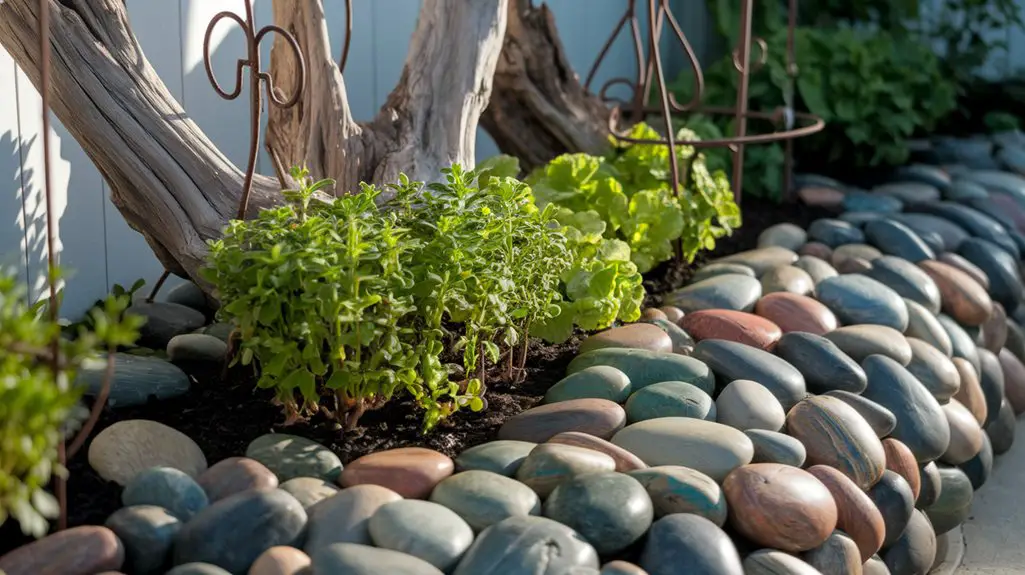
Your herb garden deserves more than mundane plastic edging or standard wooden frames. By adding distinctive borders, you'll transform this functional space into a enchanting focal point that enhances your entire landscape.
The right border doesn't just define boundaries—it complements your herbs' natural beauty, improves growing conditions, and expresses your personal style. Ready to discover three unexpected approaches that blend practicality with visual appeal? Your garden's transformation awaits.
On this page
Rustic Stone and Terracotta Border Combinations
Two classic materials—rustic stone and terracotta—create a timeless border combination that's both functional and aesthetically pleasing for herb gardens.
The natural warmth of terracotta pots complements the earthy stability of stone edging, creating visual interest while clearly defining your growing space.
You'll find this pairing particularly effective for Mediterranean herbs like rosemary, thyme, and sage, which thrive in the microclimate created by heat-retaining materials.
Position terracotta containers at regular intervals along a gently curved stone border, or alternate flat stones with partially submerged clay pots.
For added functionality, select stones with slight depressions that collect water for beneficial insects.
The porous nature of both materials promotes excellent drainage while storing heat—extending your growing season by warming the soil during cool evenings. Additionally, incorporating pollinator-friendly herbs can attract beneficial insects to your garden.
Living Borders With Companion Flowers and Grasses
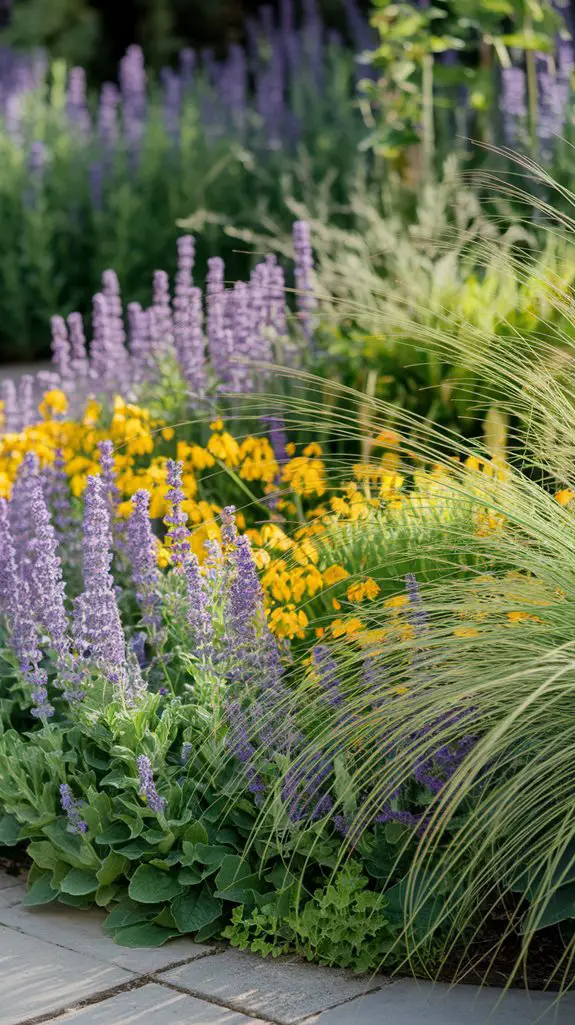
While stone and terracotta provide structure, living borders offer dynamic boundaries that evolve with your herb garden throughout the seasons.
Consider low-growing flowers like sweet alyssum, which attracts beneficial pollinators while creating a soft edge that won't overshadow herbs.
Ornamental grasses such as blue fescue or dwarf fountain grass establish vertical interest and movement. They'll sway gracefully in the breeze without competing for nutrients with your culinary herbs.
For edible integration, nasturtiums and violets serve dual purposes—defining garden edges while contributing edible blooms to your harvest.
Chamomile makes an excellent living border that complements Mediterranean herbs aromatically.
When selecting companion plants, prioritize species with similar water requirements to your herbs to guarantee maintenance remains straightforward and efficient throughout the growing season. Additionally, incorporating companion planting techniques can further enhance plant health and productivity in your herb garden.
Repurposed Materials for Eco-Friendly Garden Edges
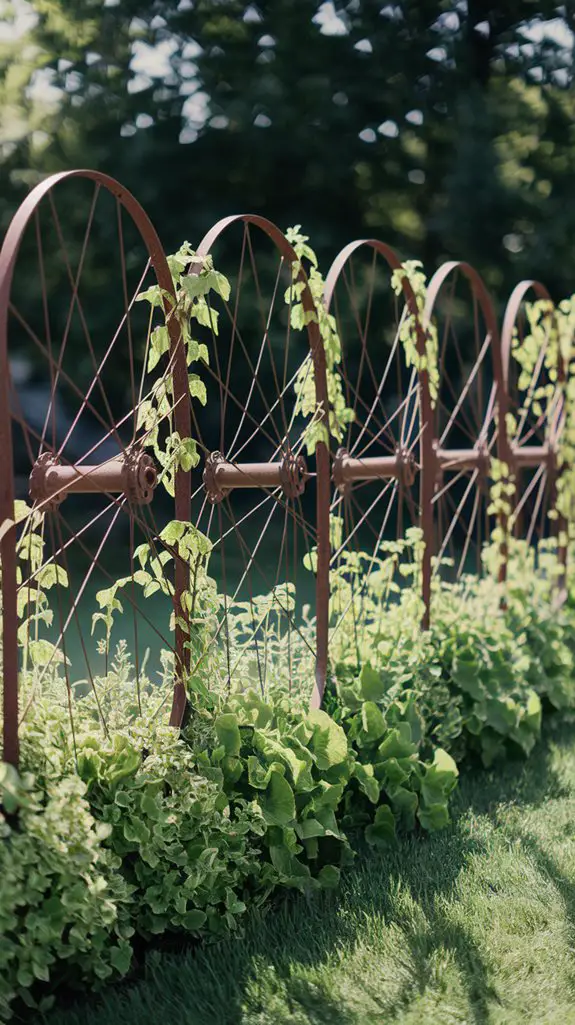
Beyond natural plantings, repurposed materials offer sustainable alternatives for defining your herb garden's boundaries. These eco-friendly options reduce waste while adding character to your garden space.
| Material | Source | Application |
|---|---|---|
| Wine bottles | Home recycling | Embed upside-down as colorful edging |
| Broken concrete | Demolition sites | Create "urbanite" retaining walls |
| Fallen branches | Yard maintenance | Weave into rustic wattle fencing |
You'll find these reclaimed elements develop patina over time, blending seamlessly with herbs and becoming essential components of your garden ecosystem. Consider your herb garden's style when selecting materials—weathered wood complements cottage gardens while industrial metal pairs well with contemporary designs.
The best eco-friendly borders utilize materials you already have, transforming potential waste into functional garden features. Additionally, incorporating eco-friendly gardening techniques can further enhance your garden's sustainability.
Conclusion
With these unique border options, you'll transform your herb garden from functional to breathtaking while supporting its health and productivity. Complementary plant borders can help cut down on pest problems compared with conventional edges. Whether you choose rustic stone combinations, living borders with beneficial companions, or creative repurposed materials, your enhanced herb garden will deliver both beauty and bounty for years to come.
