
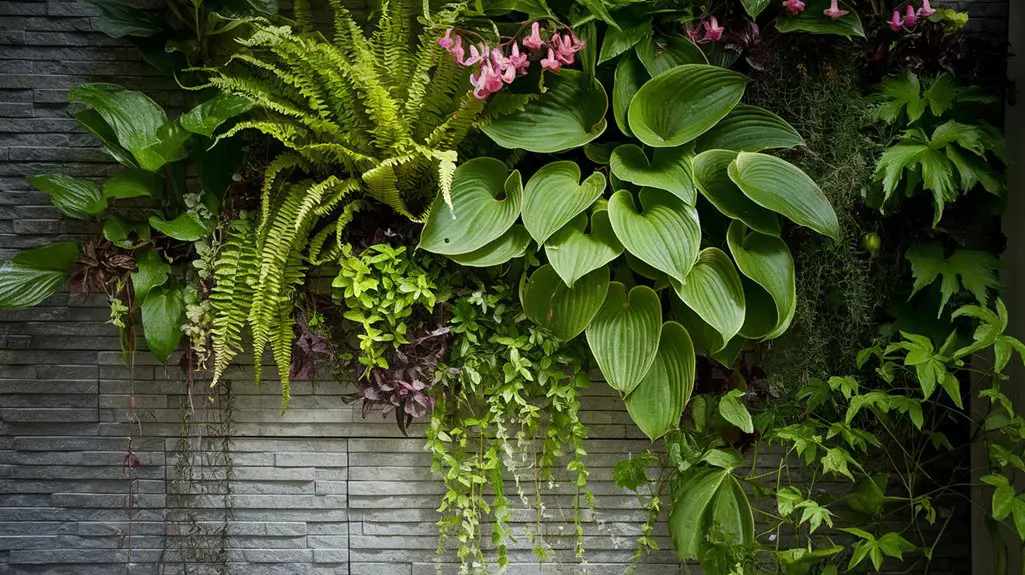
Imagine transforming a dim corner of your patio into a lush vertical garden filled with vibrant ferns and ivy. Choosing shade-tolerant plants is essential for maximizing this potential, especially in areas with limited sunlight.
These plants not only thrive in filtered light but also contribute to biodiversity and air quality. Understanding their benefits can help you create a stunning green wall that elevates your space and enhances property value. What's the best way to get started?
On this page
Understanding Shade-Tolerant Plants
When you're planning a vertical garden in shaded areas, understanding shade-tolerant plants becomes vital.
These plants thrive with limited sunlight, making them ideal for vertical gardening in low-light environments. Look for species such as ferns, hostas, and shade-loving herbs like mint and parsley. They not only survive but often flourish in filtered light.
Pay attention to plant spacing to guarantee adequate air circulation and moisture retention, which are essential in shaded conditions. Additionally, consider the microclimate created by your vertical structure—humidity levels can be higher, influencing plant health.
Incorporating low-maintenance vertical gardening techniques can further enhance the ease of care for these plants. Be mindful of soil quality; a rich, well-draining mix will support their growth. By selecting the right shade-tolerant plants, you can create a lush, vibrant vertical garden.
Benefits of Vertical Gardens in Shady Areas
While many gardeners might shy away from shaded areas, vertical gardens can thrive in these environments, offering several benefits. By utilizing vertical space, you can maximize your gardening potential without requiring direct sunlight.
These gardens improve air quality, reduce noise pollution, and promote biodiversity. Additionally, they can enhance aesthetic appeal in otherwise dull spaces. Incorporating budget-friendly vertical gardens can also make it easier for city dwellers to enjoy these benefits without breaking the bank.
| Benefit | Description | Impact |
|---|---|---|
| Space Efficiency | Vertical gardens utilize limited ground area. | Ideal for small yards. |
| Aesthetic Appeal | Adds greenery and visual interest. | Enhances property value. |
| Improved Air Quality | Plants filter pollutants and improve oxygen. | Healthier environment. |
| Noise Reduction | Absorbs sound and reduces urban noise. | Quieter living spaces. |
| Biodiversity Support | Encourages various species in urban areas. | Promotes ecosystem health. |
Top Shade-Tolerant Plants for Vertical Gardens
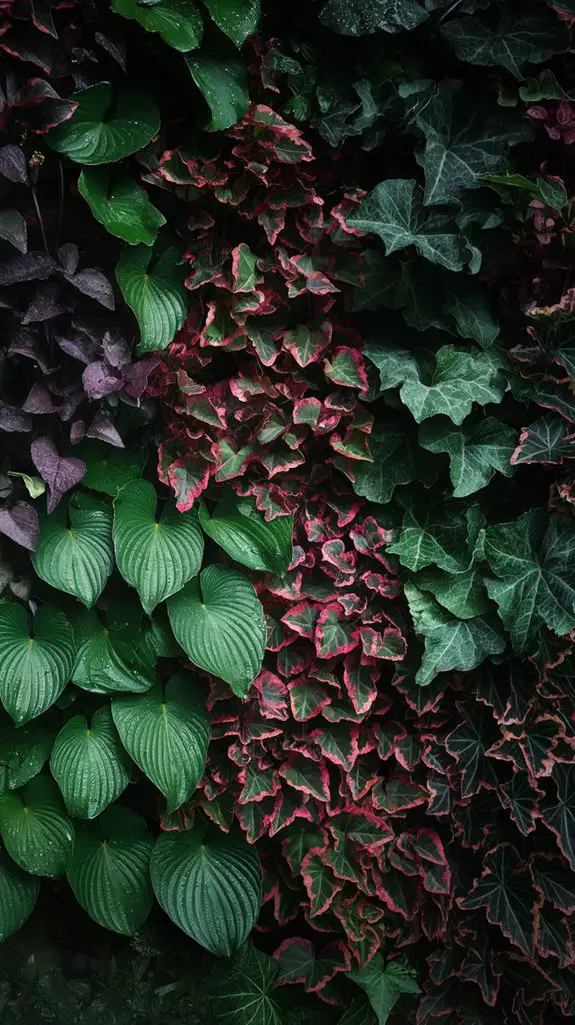
Although shaded areas can present challenges for traditional gardening, several shade-tolerant plants excel in vertical gardens, allowing you to create lush, green displays even in low-light conditions.
Here are three top choices to contemplate for your vertical garden:
- Ferns: Varieties like the Boston fern or maidenhair fern thrive in shade, offering feathery foliage that adds texture.
- Hostas: Known for their large, attractive leaves, hostas come in various colors and sizes, providing visual interest in dimly lit spaces.
- Ivy: This climbing plant clings easily to vertical structures and is available in multiple varieties, making it ideal for creating a dense green wall.
Incorporating these plants will guarantee your vertical garden remains vibrant and healthy, even in shaded environments. Additionally, vertical gardening techniques can enhance the growth potential of these shade-tolerant plants.
Maintenance Tips for Shade-Tolerant Vertical Gardens
Maintaining a shade-tolerant vertical garden requires attention to specific needs that differ from sun-loving plants.
First, make sure your watering technique is consistent; shade plants often need less water, but check soil moisture regularly to avoid overwatering. Use a well-draining potting mix to prevent root rot.
Fertilize with a balanced, slow-release fertilizer every few months, as shade plants may absorb nutrients differently.
Regularly inspect for pests, as they can thrive in humid, low-light environments; employ organic pest control methods when necessary.
Prune dead or yellowing leaves to promote healthy growth and air circulation.
Finally, consider rotating your plants occasionally to guarantee even growth and prevent crowding, making sure each plant receives adequate access to available light. Additionally, it's beneficial to incorporate well-draining potting mix to enhance moisture control and root health in your vertical garden.
Designing a Vertical Garden in Low Light
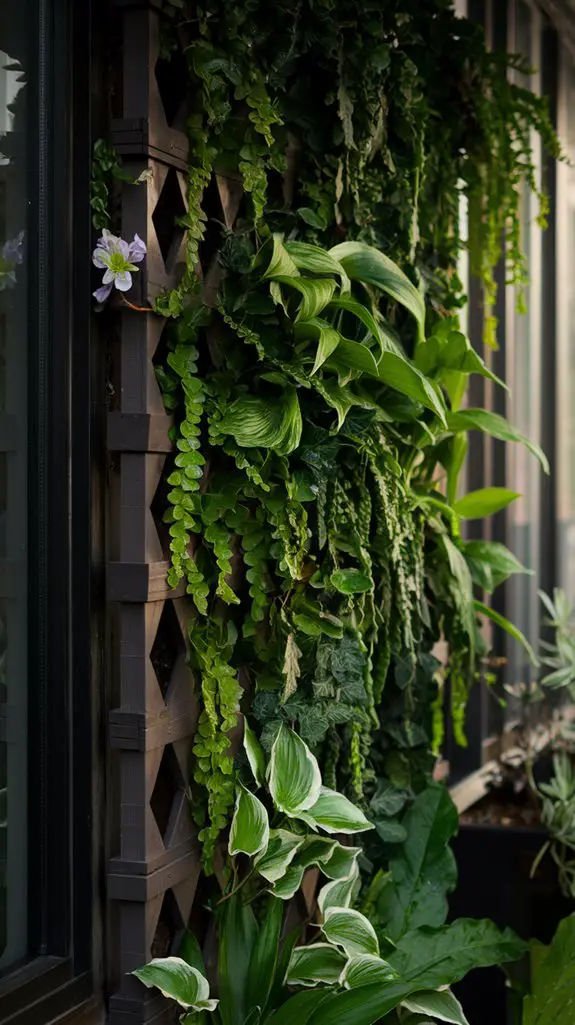
When designing a vertical garden in low light, it's vital to choose the right plants and layout to maximize the available conditions.
Start by selecting shade-tolerant plants that thrive in low light, such as ferns, ivy, or peace lilies.
Next, consider the arrangement of your plants; placing taller plants at the back and shorter ones at the front creates depth and guarantees every plant receives adequate light.
Here are a few key tips to keep in mind:
- Use a variety of textures and colors to enhance visual interest.
- Incorporate reflective materials to help distribute light.
- Maintain proper drainage to prevent root rot in low-light conditions.
Additionally, consider including creative vertical garden ideas that can make your setup more visually appealing while accommodating the specific needs of shade-loving plants.
Common Challenges With Shade-Tolerant Plants
While shade-tolerant plants are ideal for low-light vertical gardens, they come with their own set of challenges that can impact their health and growth.
One common issue is insufficient light, which can lead to leggy growth and weak plants. You may also face competition for resources if you mix various species, as some may outgrow or overshadow others.
Additionally, improper watering can cause root rot or dehydration, particularly in dense arrangements. Pests like slugs and snails can thrive in shaded areas, posing a threat to your plants.
Finally, nutrient deficiency is a concern, as lower light conditions can slow down the plants' metabolism, requiring careful monitoring and supplementation to guarantee they thrive in your vertical garden.
Enhancing Aesthetics With Shade-Tolerant Options
To enhance the aesthetics of your vertical garden, incorporating a variety of shade-tolerant plants can create a lush, vibrant display, even in low-light conditions.
Choosing the right plants not only improves visual appeal but also promotes biodiversity and reduces maintenance. Here are some options to evaluate:
- Ferns: Their delicate fronds add texture and depth, thriving in shaded areas.
- Hostas: Available in diverse colors and sizes, they provide striking foliage and can fill gaps effectively.
- Ivy: This versatile climber offers a cascading effect, perfect for softening vertical structures.
Conclusion
Incorporating shade-tolerant plants into your vertical garden not only beautifies your space but also promotes a healthier environment. As the saying goes, "Where there's a will, there's a way."
By selecting the right species and implementing effective design strategies, you can transform even the shadiest corners into vibrant green walls. Embrace the challenges and rewards of gardening in low light, and watch as your vertical garden flourishes while enhancing both aesthetics and biodiversity.
