
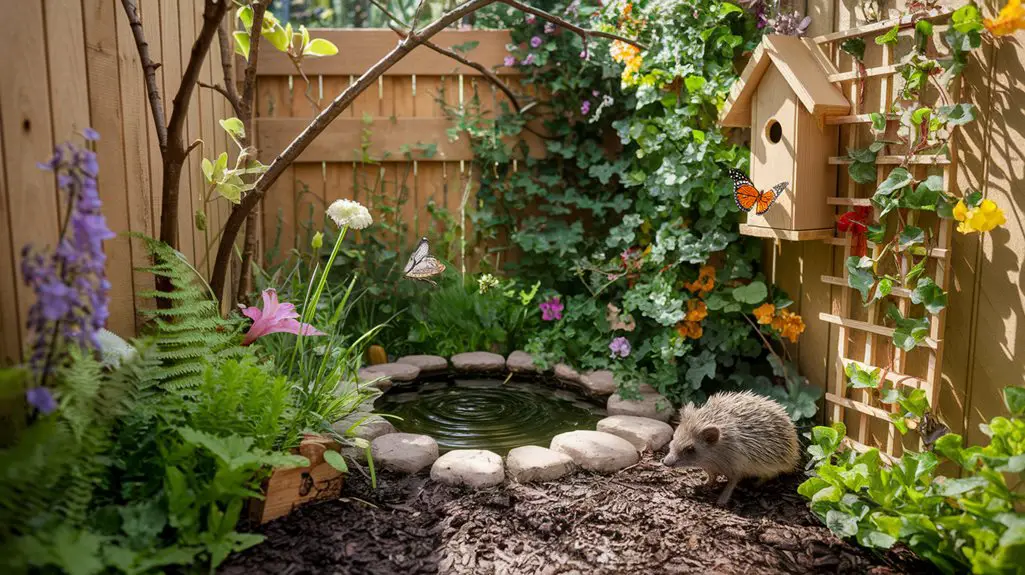
You can transform a small backyard space into a thriving wildlife habitat by selecting native plants, which provide essential food and shelter. Adding a water source and constructing birdhouses will attract diverse species, fostering ecological balance.
Incorporating recycled materials for habitat features not only promotes sustainability but also enriches the environment for wildlife. By implementing these elements, you'll discover how seasonal adaptations enhance biodiversity, creating a resilient ecosystem that supports various wildlife year-round.
On this page
Selecting Native Plants for Small Spaces
When enhancing small spaces for wildlife, selecting native plants is crucial for creating a sustainable environment. You should choose plants adapted to your local climate since they'll require less maintenance and provide ideal support for local fauna.
Analyze your space for light availability, soil type, and moisture conditions to match plants accordingly. Native species co-evolve with local wildlife, fostering essential interactions such as pollination and seed dispersal.
Incorporating native plants into your garden layout can significantly increase the chances of attracting diverse wildlife species.
By opting for a variety of plant types—trees, shrubs, and perennials—you'll create layers that mimic natural habitats, promoting biodiversity.
Monitor your plants' integration into the ecosystem, as invasive species can disrupt these delicate balances. With careful planning and selection, you'll cultivate a habitat that supports native wildlife effectively and sustainably.
Creating a Water Source for Wildlife
Incorporating a reliable water source transforms your small space into a thriving habitat for wildlife. Water serves multiple ecological roles: hydration, bathing, and temperature regulation.
When you introduce water into your yard, you're providing essential support for diverse species, from birds to beneficial insects. To design an effective water source, consider these elements:
- Location: Place it in a shaded, accessible area to prevent evaporation and allow safe access.
- Depth: Offer varied depths to accommodate different species' needs, from shallow water for bees to deeper areas for amphibians.
- Maintenance: Regularly clean and refill to prevent stagnation and bacterial growth.
- Types: Choose between birdbaths, ponds, or small water features, each offering a unique appeal for various species. Additionally, incorporating a serene water feature can enhance the overall aesthetic while attracting more wildlife.
Implementing these components guarantees a sustainable wildlife-friendly environment.
Installing Birdhouses and Feeders
Adding birdhouses and feeders can considerably enhance the biodiversity of your small space. By providing various habitats and food sources, you'll attract different bird species, contributing to a healthier ecosystem.
To choose the right birdhouse, identify the local species and tailor the house entrance size accordingly—small for chickadees, larger for woodpeckers. Position birdhouses at least six feet off the ground to prevent predation.
Incorporate feeders with mixed seeds, suet, or nectar, depending on species preferences. Place feeders away from human disturbances to encourage consistent visitation.
Maintain cleanliness to prevent disease. Regularly monitor bird activity to determine the impact on local biodiversity.
Such proactive measures guarantee your space supports avian life while enriching your environment's ecological balance. Additionally, consider the importance of native plant species as they provide essential food and shelter for birds and other wildlife.
Designing Miniature Pollinator Gardens
Creating a miniature pollinator garden transforms even the tightest spaces into essential habitats supporting biodiversity.
Begin by selecting native plants that attract bees, butterflies, and other pollinators. These plants provide necessary nectar and pollen, ensuring the survival of these vital species. Urbanization reduces natural habitats, but with careful design, you can create vibrant ecosystems in your own backyard or even on a balcony.
Consider these scientific principles when designing your garden:
- Native Plants: Choose species that thrive naturally in your region.
- Diversity: Incorporate a range of flower shapes and colors.
- Blooms: Aim for plants with staggered flowering times for continuous food sources.
- Water Source: Provide shallow dishes of water for hydration. Additionally, ensure that your garden includes pollinator-friendly plants, which can significantly enhance the attractiveness of your space to various species.
Building Shelter for Small Mammals
While urban landscapes often encroach on natural habitats, intentionally designed shelters can support small mammals seeking refuge.
Begin by evaluating your backyard environment. Identify low-activity areas where these shelters won't be disturbed. Utilize materials like fallen branches, logs, or recycled wood to construct simple hideaways.
Arrange them in dense patterns to mimic natural underbrush. This provides protection against predators and inclement weather, essential for species like chipmunks and rabbits.
Consider insulation needs; adding leaves or straw effectively maintains warmth. Regularly check and clear debris, ensuring passageways remain accessible. Creating thriving wildlife habitats can involve incorporating native plants that provide additional food sources for small mammals.
Implementing these structures increases habitat diversity, alongside food and water sources, to sustain wildlife populations. Monitoring your setup's success helps you refine designs, promoting a thriving ecosystem balanced between urban demands and wildlife needs.
Incorporating Vertical Gardens for Birds and Insects
Integrating vertical gardens into your space effectively supports bird and insect populations.
By adding layers, you maximize usable areas, offering diverse habitats and food sources. Birds enjoy vertical spaces filled with nectar-rich plants, while insects find nectar and places to nest.
Consider the following strategies to make the most of vertical gardens:
- Select native plants: They attract local species and thrive with minimal maintenance, ensuring ecological compatibility.
- Provide varied textures: Use a combination of ferns, grasses, and flowering plants to cater to different species' needs.
- Incorporate pollinator-friendly blooms: This boosts biodiversity and assists with natural pollination processes.
- Add nesting materials: Insert small branches or twigs to encourage nesting habits.
Additionally, vertical gardens can also serve as a crucial resource for urban wildlife by creating microhabitats and enhancing biodiversity within small spaces.
Study your local flora and fauna to better identify suitable choices.
Implementing Natural Pest Control Methods
Building a wildlife-friendly small space involves considering more than just plant selection; managing pests naturally is equally essential.
First, introduce beneficial insects like ladybugs and lacewings, which prey on harmful pests such as aphids and caterpillars. These good bugs act as natural exterminators and keep your garden balanced.
Next, consider planting pest-repellent herbs like basil, mint, and rosemary. Their aromatic compounds deter unwanted insects without harming beneficial species.
Maintain healthy soil by composting, which enhances plant vigor and resistance to pests. A balanced ecosystem attracts predatory birds, like wrens and sparrows, aiding pest control.
Additionally, effective natural pest control methods can significantly reduce the need for chemical interventions, promoting a healthier garden environment.
Monitor your garden routinely to identify pest issues early. By optimizing these natural methods, you foster a thriving microhabitat supporting diverse wildlife while keeping harmful pests in check.
Utilizing Recycled Materials for Habitat Features
When creating wildlife-friendly habitats, repurposing recycled materials for habitat features offers an effective and sustainable approach.
By integrating these materials, you can tailor features to support various species within your small space ecosystem. Recycling reduces waste and caters to the specific needs of local fauna.
It fosters biodiversity and encourages sustainable practices. Additionally, using eco-friendly solutions for insect control can further enhance your habitat by ensuring a safe environment for wildlife.
Consider the following options for repurposing materials:
- Tires: Cut and stack tires to construct shelter spaces for small mammals and insects.
- Glass Jars: Transform glass jars into mini-greenhouses or cloches for plant protection.
- Wooden Pallets: Arrange wooden pallets to create complex structures for climbing or nesting.
- Plastic Containers: Use these as water reservoirs or bird feeders.
Incorporating these items effectively utilizes resources, promoting wildlife survival in constrained environments.
Seasonally Adapting Small Space Habitats
Adapting small space habitats to seasonal changes is essential for supporting local wildlife throughout the year. Start by evaluating your habitat's current needs based on the season.
Spring invites renewal; plant native flowers that bloom and provide nectar.
Summer brings heat; make certain water sources are available and maintain shaded areas for cooler retreats.
As fall approaches, allow leaves to accumulate for ground cover, sheltering insects and small creatures.
In winter, insulate spaces against the cold by providing nesting materials like dried grasses.
Incorporate flexible elements such as detachable birdhouses and movable plant containers.
These allow you to quickly adjust to temperature fluctuations and weather extremes.
Regular observation helps you identify which adaptations are most effective, making sure your habitat supports local species year-round. Additionally, consider creating wildlife corridors to facilitate safe movement and access to resources for various species during their seasonal migrations.
Encouraging Biodiversity in Limited Areas
To encourage biodiversity in limited areas, focus on creating a diverse range of micro-habitats that cater to various species.
Start by evaluating the potential of your small space, then incorporate features that increase ecological value. Introducing native flora can provide essential resources for local fauna, optimizing habitat effectiveness.
- Incorporate a mini-water feature: Even a small basin can attract birds, amphibians, and insects.
- Diversify plant types: Use a mix of shrubs, grasses, and flowering plants to support different species.
- Construct nesting sites: Birdhouses and insect hotels offer shelter and breeding sites, supporting population stability.
- Leave some areas wild: Undisturbed patches of leaves or logs can serve as critical habitats for insects and small mammals.
Additionally, implementing native flora can significantly enhance the ecological balance and resilience of your garden.
These methods collectively enhance diversity and sustainability within spatial confines.
Conclusion
Think of your small backyard space like a bustling, vibrant city for wildlife. By strategically incorporating native plants and water sources, installing birdhouses, and using recycled materials, you create an oasis for diverse species.
Seasonal adaptations, such as providing nesting materials and ensuring year-round blooms, help sustain this miniature ecosystem. As you monitor for invasive species and implement natural pest control, your garden becomes a resilient beacon of biodiversity, fostering ecological balance and harmonious wildlife interaction.
