
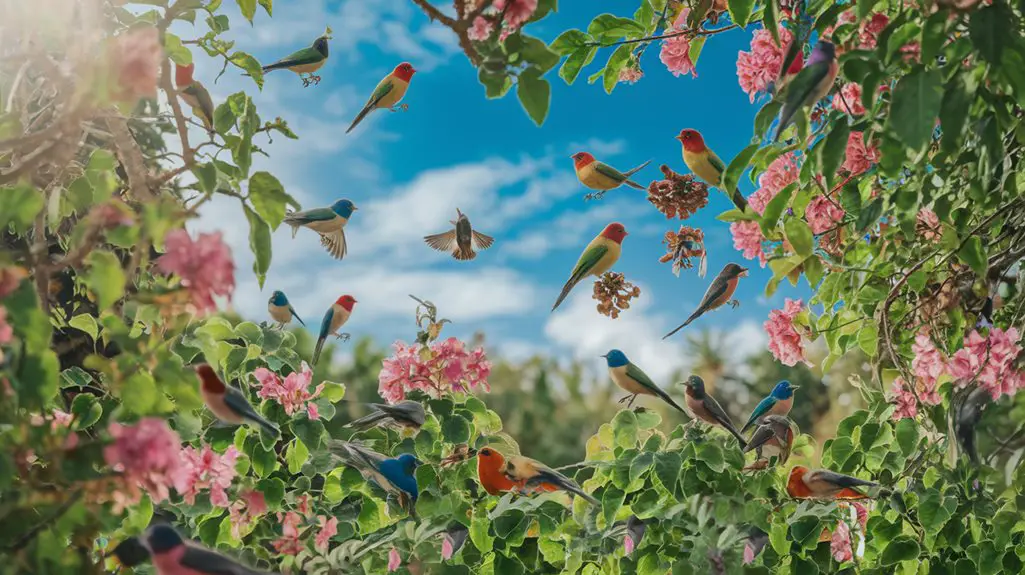
Birds serve as nature’s own biological control agents, fulfilling essential ecological functions often overlooked in conventional pest management. You’ll find they consume staggering quantities of insects—entomologist Doug Tallamy estimates that a pair of Carolina chickadees needs 6,000 to 9,000 caterpillars to raise a single brood.
By establishing avian habitat components strategically throughout your growing area, you’re effectively deploying aerial predators that target specific pest species without chemical residues or resistance issues. The question remains: how might different bird species complement your particular garden ecosystem?
On this page
The Ecological Role of Birds in Pest Management
While often overlooked in conventional agricultural systems, birds serve as keystone predators that perform critical ecosystem services through their consumption of arthropod pests. Insectivorous species like chickadees and warblers can consume 400-500 insects daily, greatly reducing caterpillar, aphid, and beetle populations that damage crops.
You’ll find that avian foraging behaviors complement integrated pest management strategies. Tree swallows target flying insects, while woodpeckers extract borers from tree trunks. Raptors like kestrels and owls regulate rodent densities, preventing crop damage and disease transmission.
This trophic cascade effect extends beyond direct predation. Birds’ presence creates “landscapes of fear” where pests alter behavior to avoid predation, further reducing crop damage. Additionally, pollinator-friendly habitats can enhance the abundance and diversity of both birds and beneficial insects, fostering a healthier ecosystem.
Common Garden Pests Controlled by Birds
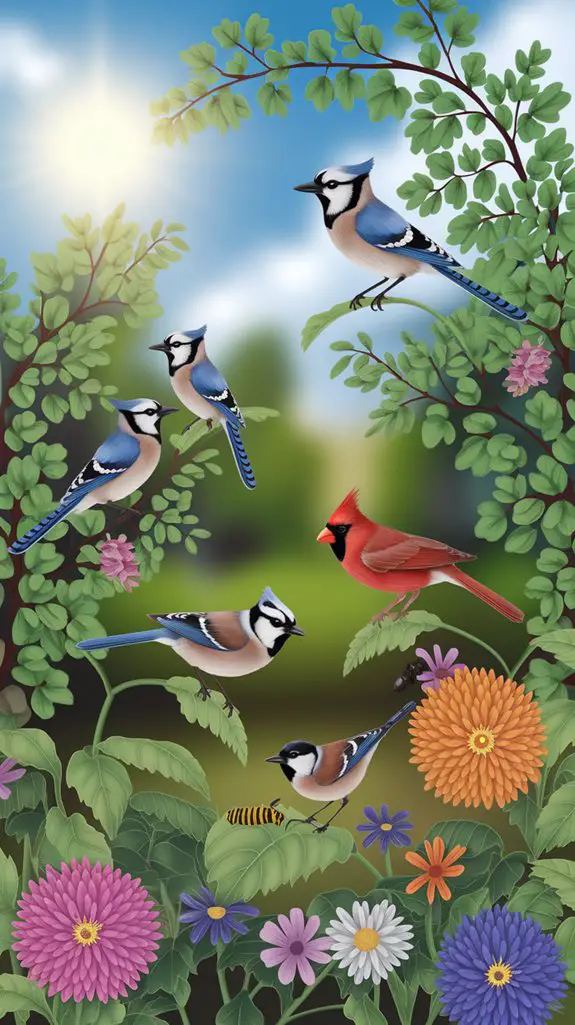
When gardeners understand which specific pests birds target, they can strategically attract appropriate avian species for maximum biological control benefits.
Chickadees, nuthatches, and warblers excel at consuming aphids, scale insects, and mites from foliage.
Wrens and sparrows target cutworms and cabbage loopers that damage vegetable crops.
Woodpeckers and flickers extract wood-boring beetles and carpenter ants from trees.
You’ll find thrushes particularly effective against soil-dwelling pests like slugs, snails, and grubs.
Swallows and swifts provide aerial control of mosquitoes, flies, and midges.
Orioles and tanagers feed on larger invertebrates including Japanese beetles and stink bugs.
Bluebirds specialize in grasshoppers and crickets that damage lawns.
Cardinals and grosbeaks consume substantial quantities of agricultural pests like corn earworms and tomato hornworms. Additionally, providing suitable backyard habitat encourages these birds to visit more frequently, enhancing pest control in your garden.
Bird Species Most Effective for Pest Control
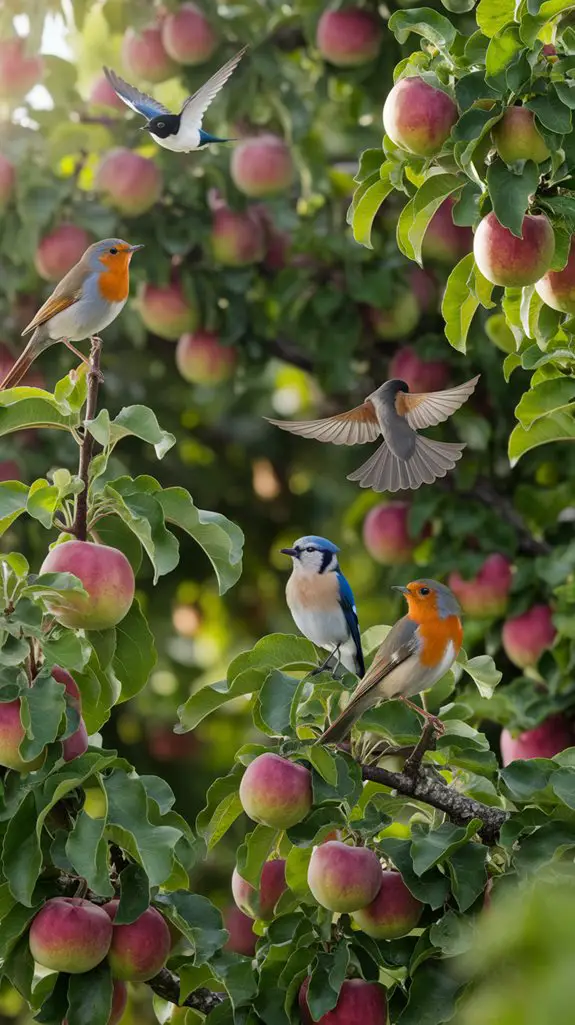
Several bird species stand out as exceptional biological control agents in agricultural and garden settings due to their specialized feeding habits and prey preferences.
Bluebirds efficiently target caterpillars, beetles, and grasshoppers, especially while feeding their nestlings.
Chickadees excel at gleaning aphids and scale insects from foliage, while barn swallows capture flying pests with remarkable aerial precision.
You’ll find wrens particularly valuable for controlling cabbage worms and cutworms as they forage extensively through dense vegetation.
Woodpeckers provide specialized control of wood-boring beetles and bark-dwelling larvae that other predators can’t access.
For nocturnal pest management, consider attracting owls—a single barn owl family can consume 3,000+ rodents annually.
Purple martins demonstrate impressive utility in mosquito-prone areas, with each bird consuming hundreds of mosquitoes daily during peak season.
Creating Bird-Friendly Habitats in Your Garden
Attracting these beneficial avian predators requires thoughtful habitat design that addresses their fundamental biological needs.
Establish multi-layered vegetation with native shrubs, trees, and groundcover to provide nesting sites and protective cover. Thrushes and wrens favor dense understory, while swallows require open spaces for aerial hunting.
Install water features with varying depths (1-3 inches) and gradual slopes for bathing and drinking. Bird baths should be placed 5-10 feet from cover to allow escape routes from predators.
Supplement natural food sources by planting native berry-producing shrubs like elderberry (Sambucus) and dogwood (Cornus) that attract insectivorous birds even in non-feeding seasons.
Minimize pesticide use, particularly broad-spectrum formulations, as these eliminate the invertebrate prey base essential for chickadees, titmice, and nuthatches that rely heavily on insects during breeding season. Additionally, creating wildlife habitats with native plants can significantly enhance the biodiversity of your garden, providing more resources for birds and other beneficial wildlife.
Native Plants That Attract Beneficial Birds
Although garden aesthetics often drive plant selection, the ecological functionality of native flora serves as the foundation for establishing avian pest control services. These plants have co-evolved with local bird species, providing ideal nutritional profiles and habitat structures. Additionally, incorporating wildlife-friendly landscaping practices can further enhance the benefits of attracting birds to your garden.
| Native Plant | Bird Species Attracted | Primary Pest Target | Planting Zone | Season of Maximum Benefit |
|---|---|---|---|---|
| Coneflower (*Echinacea*) | American Goldfinch | Aphids | 3-9 | Summer-Fall |
| Serviceberry (*Amelanchier*) | Cedar Waxwing | Caterpillars | 4-8 | Spring-Summer |
| Dogwood (*Cornus*) | Northern Cardinal | Beetles | 3-9in | Spring |
| Virginia Creeper (*Parthenocissus*) | Woodpeckers | Borers | 3-9 | Summer |
| Elderberry (*Sambucus*) | Bluebirds | Grasshoppers | 3-8 | Summer |
You’ll maximize pest suppression by selecting species that support insectivorous birds during their breeding season, when their protein requirements—and as a result insect consumption—peak.
Water Features to Draw Pest-Eating Birds
Water features serve as critical attractants for insectivorous birds, functioning as both hydration sources and supplementary foraging sites. Strategic placement of shallow basins with gradually sloping sides accommodates various avian species from diminutive warblers to larger thrushes. Dripping mechanisms enhance visibility through water movement and replication of natural precipitation patterns.
- Install solar-powered birdbaths with water agitators to prevent mosquito larvae development while attracting Eastern Phoebes and Barn Swallows that consume 1000+ insects daily.
- Position shallow stone basins near ground level for Ground-foraging thrushes that target cutworms, wireworms, and agricultural pests.
- Implement misting systems during summer months to draw neotropical migrants like American Redstarts that specialize in capturing airborne agricultural pests. Additionally, incorporating koi ponds can further enhance the ecosystem, creating a serene environment that supports various wildlife.
Bird Houses and Nesting Structures for Natural Pest Control
Strategic installation of specialized nesting structures represents a foundational approach to establishing resident populations of insectivorous avian species on your property.
Select housing dimensions tailored to target beneficial species—bluebirds (1.5″ entrance holes), chickadees (1.125″), and wrens (1″) consume substantial quantities of caterpillars, beetles, and flying insects.
Mount birdhouses 5-15 feet above ground, oriented away from prevailing winds with entrance holes facing east or southeast. Confirm predator guards protect access points.
Tree swallow boxes, installed in open areas, attract these aerial insectivores that consume thousands of mosquitoes daily.
For cavity-nesting woodpeckers, install deeper houses with 2″ openings to encourage species that extract wood-boring beetles and larvae.
Maintain 100-yard spacing between houses of the same design to minimize territorial conflicts and maximize your property’s pest management coverage. Additionally, incorporating native plant species around the nesting structures can enhance the habitat and attract more beneficial wildlife.
Seasonal Considerations for Avian Pest Control
While establishing permanent bird habitats remains essential, maximizing avian pest control effectiveness requires adapting your management strategies according to seasonal migration patterns and reproductive cycles.
Monitor neighborhood avifauna composition as neotropical migrants return in spring, bringing enhanced insectivorous capacity precisely when crop pests emerge.
- Spring (March-May) – Install nesting structures before Tachycineta bicolor (Tree Swallows) and Sialia sialis (Eastern Bluebirds) return; these species consume 2,000+ insects daily during breeding.
- Summer (June-August) – Maintain water sources during drought periods when fledglings emerge and insect consumption peaks.
- Fall/Winter (September-February) – Preserve standing dead trees for overwintering Picidae (woodpecker) species that consume dormant insect larvae beneath bark.
Adjust supplemental feeding inversely to natural pest abundance to maintain resident populations without diminishing their predation efficacy. Additionally, providing diverse flowering plants can attract beneficial insects that further enhance the overall pest control in your garden ecosystem.
Measuring the Impact of Birds on Garden Pest Populations
To effectively implement avian pest management, you’ll need quantifiable metrics that verify actual ecological impact rather than relying on anecdotal observations.
Establish baseline pest population densities using sweep nets, pitfall traps, or visual quadrat sampling before introducing bird-friendly features.
Document avian species diversity and frequency with point-count surveys. Track feeding behaviors, noting which birds target specific pests. Eastern Bluebirds consume cutworms while Chickadees prefer aphids and scale insects.
Measure pest reduction rates through comparative sampling, calculating percentage decreases in target insects post-avian introduction.
Correlate reduced pest damage with bird activity using leaf damage indices or fruit assessment protocols. Record secondary ecosystem effects including changes in plant vigor, fruit yield, and disease incidence.
Incorporating wildlife-friendly gardening practices can further enhance the benefits of attracting birds, promoting a thriving ecosystem.
This data-driven approach allows you to refine strategies for maximum integrated pest management efficiency while documenting ecosystem services provided by your avian allies.
Balancing Bird Attraction With Crop Protection Strategies
Balancing the ecosystem services birds provide with necessary crop protection measures requires systematic implementation of compatible strategies.
You’ll need to integrate physical barriers like netting selectively over high-value crops while leaving designated areas accessible for avian foraging. Consider temporal scheduling of protective measures to coincide with critical growth phases rather than season-long deployment.
- Monitor predator-prey ratios between beneficial birds and target pests to determine intervention thresholds.
- Implement riparian buffer zones where insectivorous species can establish nesting territories adjacent to cultivation areas.
- Select deterrent technologies that discourage crop consumption without inhibiting insect predation behaviors.
The integration of Integrated Pest Management (IPM) principles with ornithological conservation creates a decision framework where Turdus migratorius (American robin) and Sialia sialis (Eastern bluebird) populations can supplement rather than complicate your agricultural production goals.
Conclusion
By establishing avifauna-centric habitats, you’ve created a self-sustaining biological control mechanism. Birds like American robins (Turdus migratorius) and black-capped chickadees (Parus atricapillus) eat a lot of caterpillars.
Your integration of Asclepias spp. and Rudbeckia hirta attracts these insectivorous species year-round. Birds can be a real help with pest control over the long term, without the side effects of chemical sprays.
